

In the vibrant tapestry of India’s culinary landscape, few elements capture the essence of celebration quite like its festive snacks. These are not merely bites to satiate hunger; they are edible narratives, woven with threads of tradition, regional identity, and profound affection. As a chef dedicated to transforming ingredients into experiences, I find an unparalleled allure in the meticulous artistry behind these seemingly humble creations. The festive snack board, a concept that transcends geographical boundaries, truly finds its most spectacular and authentic expression within Indian homes. It is a kaleidoscope of textures, an orchestra of flavors, and a visual symphony that beckons guests to partake in a culinary journey. Imagine a meticulously curated platter, gleaming under festive lights, each morsel a testament to generations of culinary wisdom. This is where the magic truly begins, where the simple act of sharing becomes a profound cultural ritual. The anticipation builds as the eyes feast upon the array of golden-brown delights, each promising a unique sensation, a memory waiting to be etched. It is this multisensory engagement that elevates these snacks from mere accompaniments to the very heart of the celebration, bridging communities and creating lasting bonds over shared indulgence. The passion that goes into their preparation, often involving entire families, speaks volumes about their significance, transforming kitchens into bustling hubs of creativity and camaraderie. These are the unsung heroes of countless Indian festivals, the comforting anchors that ground us in tradition even as the world around us evolves.
Among these culinary jewels, the ubiquitous Bhujia stands as a testament to rustic elegance and complex simplicity. Originating from the arid lands of Rajasthan, particularly Bikaner, its journey from a local delicacy to a global sensation is a narrative of irresistible charm. At its core, Bhujia is a fine, crispy noodle-like snack, masterfully crafted from chickpea flour, or ‘besan,’ delicately seasoned with a symphony of spices. The true artistry lies in the precision of its making: the ‘besan’ is meticulously kneaded into a pliable dough, often infused with carom seeds (ajwain) for a nuanced peppery warmth, red chili powder for a gentle kick, turmeric for its signature golden hue, and a secret blend of proprietary spices that give each regional variant its distinct character. The dough is then pressed through a ‘sev maker,’ an intricate brass instrument that extrudes thin strands directly into hot oil, where they instantly transform into delicate, brittle golden threads. The frying technique is paramount; it requires an intuitive understanding of oil temperature to achieve that perfect, uniform crispness without succumbing to excessive oiliness or burning. From a chef’s perspective, I marvel at its textural complexity – a melt-in-the-mouth quality that belies its initial crispness. Its ‘chatpata’ (tangy, spicy, savory) flavor profile, often enhanced with a hint of black salt and a whisper of asafoetida, makes it incredibly versatile. While traditionally enjoyed with tea, I envision Bhujia as a sophisticated textural component in modern dishes: sprinkled over a vibrant avocado chaat for an unexpected crunch, elegantly garnishing a creamy lentil soup, or even incorporated into a savory tart for an innovative Indian-fusion appetizer. Presented in an antique silver bowl, perhaps nestled amongst fresh marigold petals, its visual appeal is elevated, transforming a humble snack into a statement piece on any festive table, a true celebration of culinary ingenuity and enduring flavor.
Equally enchanting and deeply rooted in India’s diverse snack heritage is Thattai, a crispy, disc-shaped delicacy that hails predominantly from the southern states, particularly Tamil Nadu. Where Bhujia offers a delicate noodle-like crunch, Thattai presents a more robust, satisfying shatter. Its foundation is meticulously milled rice flour, often aged to achieve a finer texture, which contributes to its unique crispness and light, airy mouthfeel. The spice blend is distinctively different from Bhujia, often featuring split chickpeas (chana dal) soaked and ground, lending a beautiful nutty undertone, along with fresh curry leaves, a generous hand of red chili powder for warmth, and the pungent, earthy notes of asafoetida. The preparation of Thattai is an act of meditative precision. The rice flour is combined with warm water, often mixed with a touch of butter or ghee, and kneaded into a firm yet pliable dough. Each Thattai is then hand-pressed into thin, uniform discs – a skill passed down through generations, ensuring every piece fries evenly and achieves that signature gossamer-thin crispness. The frying process is another critical stage; the oil temperature must be perfectly calibrated to allow the Thattai to puff slightly, attaining a beautiful golden-brown hue without becoming overly hard or absorbing too much oil. The satisfying crackle as it breaks, followed by the fragrant burst of curry leaves and the subtle heat of chili, is an experience that lingers delightfully on the palate. As a chef, I find its inherent structure fascinating. I often consider how to present Thattai in a contemporary setting, perhaps arranged artfully on a dark slate platter, interspersed with colorful edible flowers, and served alongside a vibrant green mango relish or a delicate coconut chutney. Its versatility also inspires fusion explorations, such as infusing the dough with finely minced ginger and garlic for an aromatic twist, or incorporating a subtle hint of lime zest to brighten its profile. Thattai is more than just a snack; it’s a symbol of hospitality, embodying the warmth and rich culinary traditions of South India, a testament to the fact that true flavor often emerges from the simplest, most thoughtfully prepared ingredients.
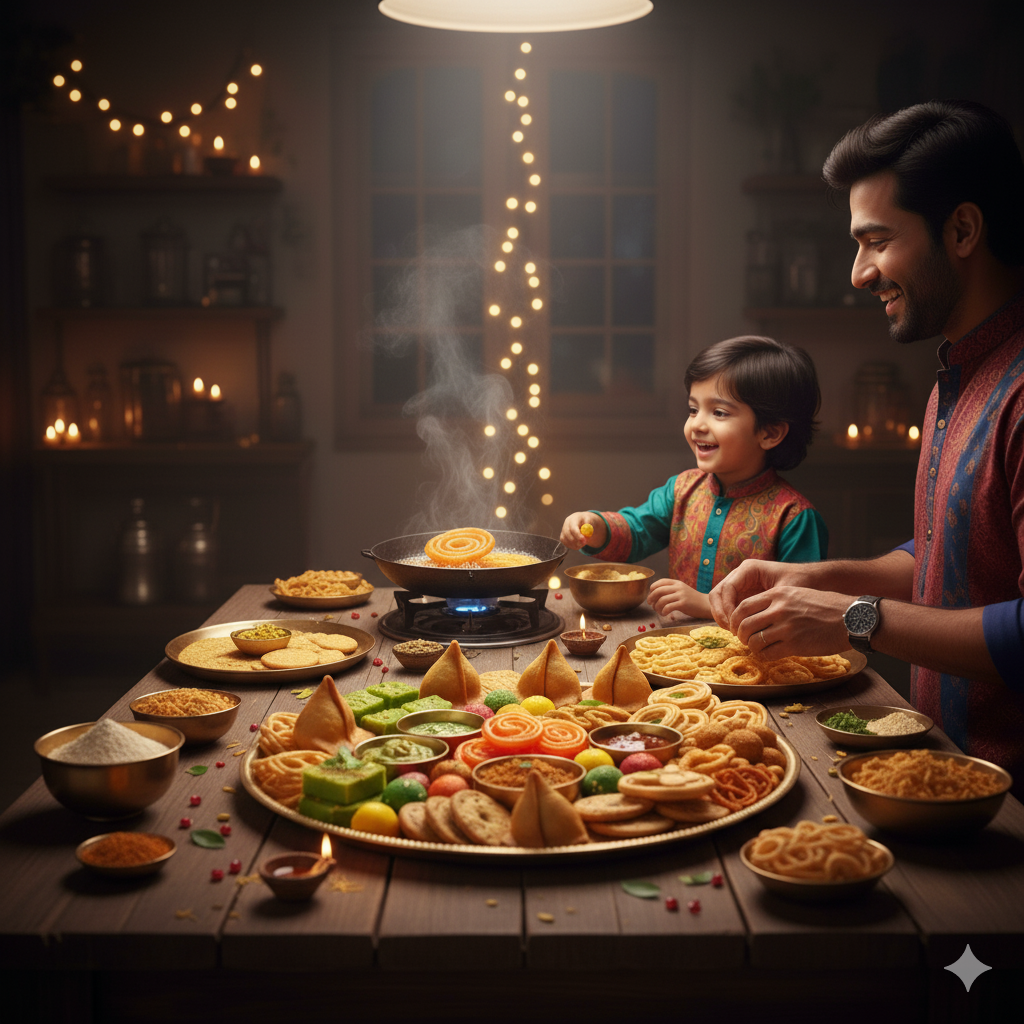
The creation of an Indian festive snack board, therefore, is an exercise in culinary curation and artistic expression, transcending the mere placement of edibles. It transforms into a vibrant canvas, where Bhujia and Thattai, along with an array of other traditional delights like crunchy murukku, golden chakli, or even delicate sweet pastries, are arranged with deliberate thought. My approach to such a board is akin to composing a symphony of textures and colors: the rich golden-browns of the fried snacks providing a warm base, contrasted with the verdant green of fresh mint chutney or the deep crimson of a tamarind dip. The visual appeal is paramount, a deliberate interplay of shapes and sizes, where a tall pyramid of Bhujia might sit beside a neatly fanned arrangement of Thattai, perhaps accented by brightly colored fresh fruits or roasted nuts to add further dimension and a healthy counterpoint. Beyond the aesthetic, these snacks are the very pulse of India’s cultural heartbeat. They embody narratives passed down through generations, recipes whispered from mother to daughter, each technique honed over countless festive seasons. The act of preparing these snacks often transforms the kitchen into a bustling hub of communal activity, fostering storytelling, laughter, and an invaluable intergenerational transfer of culinary knowledge. This board reflects India’s diverse food heritage not merely through ingredients, but through the very spirit of its people – resilient, vibrant, and deeply connected to their roots. Each bite tells a story of regional identity, of seasonal harvests, and of the unique agricultural bounties that have shaped India’s vast culinary lexicon. It’s a reminder that true culinary masterpieces often emerge from the meticulous care and profound love poured into their creation, transforming humble ingredients into extraordinary expressions of culture and connection.
Ultimately, Bhujia and Thattai, along with their myriad counterparts on India’s festive snack board, are far more than simple comestibles; they are edible poetry, profound expressions of joy, and tangible links to a rich and enduring heritage. They are testament to the genius of Indian home cooks and culinary artisans who, through centuries, have perfected the art of transforming basic ingredients into something truly extraordinary and deeply comforting. As a chef, I am constantly inspired by their inherent beauty, their complex yet harmonious flavors, and the sheer delight they bring to every table. They encapsulate the spirit of Indian festivals – a celebration of life, family, and abundance, all encapsulated within these crunchy, savory bites. I invite you to not only savor these magnificent creations but to truly appreciate the history, the artistry, and the love imbued in every single morsel. Explore their nuances, understand their origins, and perhaps even embark on your own culinary adventure to recreate them, thereby becoming a part of their ongoing legacy. For in every delicate crunch, in every explosion of spice, there lies a story of a nation’s culinary soul, a soul that continues to sing with vibrant flavors, inviting all to partake in its magnificent, festive feast. These snacks remind us that the greatest gastronomy often transcends the elaborate, finding its truest form in shared moments and deeply cherished traditions.