

In the high-octane world of professional kitchens, where the heat is relentless and the demands unyielding, there’s an unspoken code. It’s a culture of resilience, a stoic dedication to the craft that often prioritizes output and performance above all else. We chefs are taught to be impenetrable, to absorb pressure, to lead with an unwavering hand, much like a perfectly seared steak – crispy, robust, and seemingly unyielding on the exterior. Yet, just as the true artistry of that steak lies not merely in its crust but in the tender, perfectly cooked interior, so too does the true strength of an individual reside beneath the surface. For years, I, like many, subscribed to the notion that certain introspective practices, certain conversations, were simply not for the likes of us – too soft, too touchy-feely, perhaps even a distraction from the relentless pursuit of culinary perfection. This deeply ingrained skepticism wasn’t just a personal bias; it was a reflection of a broader societal ‘recipe’ for masculinity, one that often omits crucial ‘ingredients’ for internal well-being. We’ve been handed down this ancient, flawed recipe through generations, rarely daring to question its omissions, its subtle imbalances that, over time, can render a life profoundly unsatisfying, despite a seemingly brilliant exterior. Imagine crafting a dish with all the showmanship, the technical flair, but neglecting the delicate balance of seasoning, the essential aromatics, or the patiently simmered stock that forms its very soul. It might look impressive, but the experience of consuming it would be hollow, lacking the depth, the umami, the lasting satisfaction that truly elevates a meal from mere sustenance to an unforgettable journey. The internal ‘kitchen’ – our minds, our emotions – is no different. If it’s chaotic, unorganized, with rotten ingredients (unaddressed issues) festering in the corners, the ‘dishes’ we present to the world – our relationships, our work, our very life experiences – will invariably suffer. The initial resistance to exploring these inner landscapes, to embracing what felt like alien concepts, was a powerful barrier. It was the fear of diluting the ‘toughness’ that was synonymous with success, the apprehension that vulnerability might somehow compromise our capacity to lead, to create, to endure. But a significant shift occurred, a moment of personal culinary experimentation, if you will, where I dared to try an unconventional approach. This wasn’t a mere intellectual exercise; it was an experiential plunge, much like a chef trying a new, unheard-of ingredient or a radical technique that initially seems absurd but yields incredible, transformative results. That tentative first step, born from a mix of curiosity and perhaps a quiet desperation for something more profound, was a revelation. It wasn’t about dismantling the ‘tough’ exterior, but about ensuring the internal landscape was not just resilient, but truly vibrant, capable of producing a life far richer and more flavorful than I had ever imagined possible. It revealed that the true measure of strength isn’t the ability to remain unbroken by external pressures, but the courage to cultivate an inner world that can withstand, adapt, and ultimately thrive amidst life’s inevitable challenges. It’s about daring to deviate from the established ‘cookbook’ of life, to write new, more nourishing chapters for ourselves and, in doing so, inspire a more wholesome culinary tradition for all.
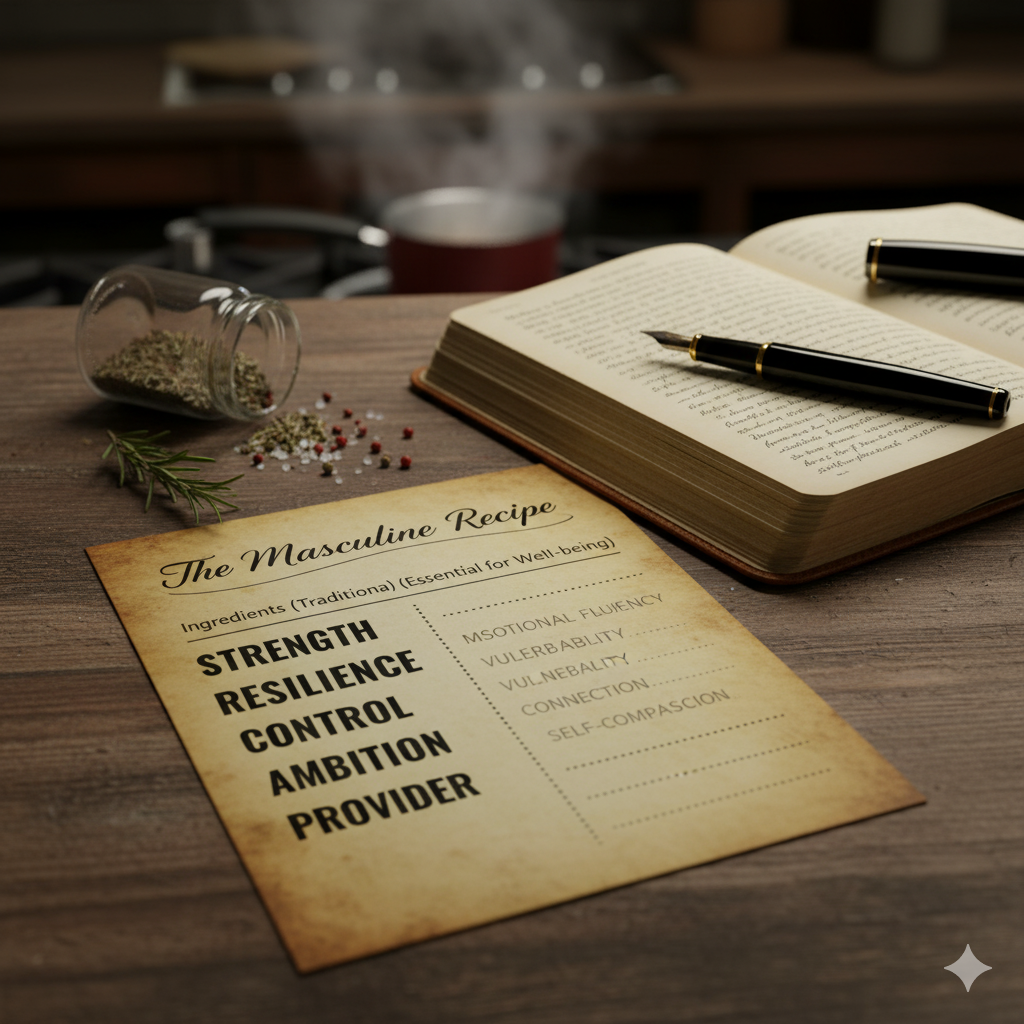
To truly craft a life of richness, we must first understand its foundational ‘ingredients.’ These are not the flashy, prominent components that immediately catch the eye, but rather the essential, often overlooked elements that provide depth, balance, and nourishment – the aromatics, the delicate seasonings, the patiently reduced stock that forms the very soul of a complex and satisfying dish. In the context of our inner lives, these ‘ingredients’ manifest as authentic self-expression, genuine connection, professional support (like therapy or mentorship), mindfulness, consistent physical activity, and healthy habits. Consider authentic self-expression: it’s the purest, unadulterated flavor, untainted by societal expectations or performative posturing. Just as a chef selects only the freshest, highest-quality produce, free from blemish or compromise, so too must we strive for unvarnished truth in how we communicate our feelings, our needs, and our experiences. This isn’t about raw emotional outpouring without thought, but about the measured, deliberate unveiling of our true selves, allowing our internal ‘flavor profile’ to emerge clearly. Then there’s genuine connection, which is akin to a perfectly emulsified sauce – a harmonious blend of distinct elements that, when skillfully combined, create something greater than the sum of their parts. This isn’t superficial banter or casual camaraderie; it’s the deep, vulnerable sharing with trusted individuals, where listening is as important as speaking, and empathy forms the binding agent. Without this, our lives can feel like a collection of disparate ingredients, never quite coming together to form a cohesive, satisfying whole. Professional support, such as therapy or coaching, isn’t a sign of weakness, but a commitment to excellence, much like a dedicated chef consulting a seasoned sommelier for the perfect pairing, or a skilled sous chef providing an objective eye to a technique that the head chef might be too close to perceive. It’s an investment in refining our internal ‘techniques,’ identifying subtle imbalances, and learning new ‘recipes’ for resilience and growth. Mindfulness, meanwhile, is the constant ‘tasting and adjusting’ of our inner landscape. It’s the practice of being present, of observing our thoughts and emotions without judgment, allowing us to understand what’s missing, what’s in excess, and how to bring our internal experience into better harmony. This constant feedback loop is vital; without it, our internal ‘dish’ can quickly become over-seasoned, undercooked, or simply bland. Physical activity and healthy habits are the essential ‘prep work’ – the diligent mise en place – that sets the stage for a successful ‘service.’ Just as a chef ensures their knives are sharp, their stations organized, and their ingredients ready before the rush, so too do these practices prepare our bodies and minds to face life’s challenges with clarity and stamina. Neglecting these fundamentals is like trying to cook a five-course meal with blunt tools and a disorganized pantry; the result is chaos, stress, and a subpar outcome. Mental resilience, therefore, is not an innate, unchanging state, but a dynamic product of these carefully chosen and cultivated ‘ingredients.’ It’s like building layers of flavor in a complex stew; each component adds depth, complexity, and robustness, contributing to an overall experience that is far more satisfying and enduring. Using ‘substitute ingredients’ – unhealthy coping mechanisms like avoidance, excessive indulgence, or aggression – might offer a fleeting fix, much like using artificial flavorings, but they ultimately spoil the dish, leaving a lingering bitterness and a profound lack of true nourishment. Our own experiences in the intense, high-pressure environment of a professional kitchen teach us that brute force alone isn’t enough to sustain mental fortitude. It’s through intentional practices, through the deliberate integration of these ‘ingredients,’ that we not only survive but truly excel, crafting a life that is as rich and nuanced as our most celebrated culinary creations.
The journey from skepticism to embracing these essential ‘ingredients’ of well-being is not a sudden leap, but a meticulous process of ‘preparation,’ much like mastering a complex cooking technique. It begins with acknowledging the deep-seated reluctance, the invisible barriers that men often construct around their emotional lives – fear of judgment, a perceived loss of masculinity, ingrained habit, or simply a lack of the right ‘tools’ or language. This initial awkwardness, much like learning to hand-make pasta or temper chocolate for the first time, is inevitable. There will be mistakes, moments of frustration, and the temptation to revert to simpler, less demanding methods. But just as a chef persists through these early challenges, understanding that mastery requires practice, patience, and often, the guidance of a seasoned mentor, so too must we approach our emotional development. The traditional ‘kitchen’ of society, particularly for men, has often been a loud, demanding, and largely unforgiving space, with little room for vulnerability. Historically, it was a place where emotions were suppressed, and any perceived ‘weakness’ was quickly exposed. However, just as modern culinary establishments are evolving to recognize the paramount importance of team well-being and a supportive work environment, so too must our broader societal ‘kitchens’ adapt. The courage required for this transformation isn’t the brute force courage of confronting an external threat, but a more subtle, profound internal fortitude – the courage to be vulnerable, to expose inner thoughts and feelings that have long been kept under wraps. It’s akin to a chef making the bold decision to radically simplify a complex dish, trusting entirely in the purity and integrity of a few perfectly sourced ingredients, even when the instinct is to hide perceived imperfections with elaborate garnishes. The role of peer support becomes crucial here, forming a ‘brigade’ of trusted individuals, all working towards a common goal of self-improvement and mutual understanding. This isn’t just about bravado or superficial camaraderie; it’s about genuine care, a collective commitment to creating a safe space where each member can taste, evaluate, and adjust their internal ‘recipe’ without fear of condemnation. The process is iterative, much like refining a soufflé. The first attempt might fall flat, the second might be slightly off, but with each successive effort, adjustments are made, lessons are learned, and the technique improves. This consistency, this daily attention and care, is paramount, whether nurturing a sourdough starter to perfect texture or maintaining the precise temperature for tempering chocolate. It’s the steady, unwavering commitment to the process that yields truly exceptional results. Overcoming the societal ‘stigma’ attached to seeking help isn’t about ignoring the challenge, but about reframing it. A good chef isn’t afraid to taste their dish, to adjust the seasoning, and even to discard a batch if it doesn’t meet their exacting standards. Seeking support is not a flaw in the ‘product,’ but a critical part of the quality control process, a demonstration of dedication to excellence. It is an active choice to engage, to hand-make the ‘pasta’ of our emotional lives rather than opting for a pre-packaged, less fulfilling alternative. The effort is greater, but the resulting depth and satisfaction are incomparable. And then there’s the internal ‘critic,’ that persistent voice that tells men they shouldn’t feel certain ways, that their struggles are signs of inadequacy. Managing this critic is like a chef managing the relentless demands of a busy service – acknowledging the pressure, filtering out the noise, and focusing on the task at hand with calm precision. It’s about recognizing that this voice is merely a reflection of ingrained societal narratives, not an objective truth. By actively engaging in the process of self-reflection and seeking support, we learn to quiet that critic, to refine our internal dialogue, and to cultivate a space where authenticity and growth can truly flourish, transforming the chaotic kitchen of our minds into a well-ordered, innovative culinary sanctuary.
The true reward of this deliberate ‘preparation’ and the integration of essential ‘ingredients’ manifests in a profound ‘transformation,’ much like the culinary magic that turns raw components into a magnificent, nourishing feast. This is the ‘taste’ of a life lived with greater authenticity, richness, and depth. The benefits are multifaceted: improved relationships, a heightened sense of resilience, deeper self-awareness, an awakening of creativity, and an overall surge in life satisfaction that permeates every aspect of existence. Imagine the finished dish – not just sustenance, but a masterpiece that nourishes not only the body but the soul. The ‘taste’ of authenticity, of being genuinely seen and heard, and of truly connecting with others, is an exquisite sensation. It’s like a dish where every flavor note sings in perfect harmony – the acidity cutting through the richness, the sweetness balancing the savory, each element enhancing the other to create an unforgettable symphony on the palate. When we unlock this internal harmony, the ripple effect is undeniable. Just as a chef’s infectious passion can elevate an entire kitchen, inspiring a brigade to push boundaries and create extraordinary dishes, one man’s journey towards emotional literacy and self-care can inspire others in his orbit. It creates a new culture, a new ‘menu’ of possibilities for those around him. This transformation also brings about greater clarity and focus, much like a perfectly clarified consommé, where all impurities have been meticulously removed to reveal the pure, unadulterated essence. With a mind unburdened by unaddressed emotional weight, we gain a sharper perspective, an enhanced ability to perceive situations with precision and respond thoughtfully rather than react impulsively. Life’s challenges don’t disappear, of course; the kitchen will still have its rushes, its unexpected ingredient shortages, its demanding diners. But our capacity to process them changes dramatically. We learn to navigate these pressures with more grace, strength, and composure, much like a seasoned chef calmly adapting to a sudden surge in orders, never losing sight of the overall vision. This isn’t merely about surviving life; it’s about thriving, moving beyond a utilitarian ‘meal’ to a gourmet experience, rich in flavor, texture, and lasting satisfaction. The impact extends far beyond personal well-being, influencing our roles as leaders, mentors, and family members. A chef who is calm, present, and emotionally intelligent can lead a kitchen with far greater efficacy and inspiration than one who is volatile, closed off, and consumed by internal turmoil. This translates directly to being a better father, a more engaged partner, a more understanding friend, and a more compassionate community member. The concept of ‘palate development’ applies here as well; the more we engage with the complex ‘flavors’ of our emotions and life experiences, the more refined our understanding becomes. This heightened discernment allows us to savor the nuances of existence, to appreciate the subtle bitterness alongside the profound sweetness, and to find beauty in the intricate interplay of all components. Furthermore, a mind free from the heavy burden of unaddressed emotional baggage is a mind liberated to innovate, to explore new ‘culinary’ horizons. The most groundbreaking and delicious dishes often emerge from a place of inner balance and peace, not from chaos and internal struggle. The transformation is not just about feeling better, but about living more fully, creating a life that is truly an extraordinary culinary masterpiece, beautiful and nourishing both inside and out.
The journey from an initial, perhaps cynical, dismissal of introspection to a profound embrace of personal well-being is not just a theoretical concept; it is a lived reality for countless individuals, including myself. What seemed like a superfluous indulgence or even a sign of weakness has proven to be an indispensable ingredient in crafting a life of genuine richness and robust resilience. The message is clear and resounding: the benefits of engaging with one’s inner world, of seeking support, and of cultivating emotional intelligence are not merely desirable, but absolutely essential for a fulfilling existence. It is time for every man to consider this vital investment in himself, not as a luxury, but as a fundamental act of strength and self-preservation. Just as every accomplished chef understands the non-negotiable importance of maintaining sharp knives and well-calibrated equipment – tools for excellence in their craft – so too should we recognize that emotional intelligence and self-awareness are the indispensable tools for excellence in the craft of living. They are not accessories; they are foundational to navigating life’s complexities with grace, insight, and effectiveness. So, where does one begin? The initial step doesn’t need to be a monumental overhaul. What is the smallest, easiest ‘ingredient’ you can incorporate into your daily ‘menu’ for personal growth? Perhaps it’s committing to a few minutes of mindful reflection each morning, like a chef reviewing the day’s prep list before service begins. Perhaps it’s daring to share an authentic thought or feeling with a trusted friend, tasting the waters of vulnerability. Or perhaps it’s simply acknowledging that the internal ‘kitchen’ needs a little more attention, a little more intention, than it’s currently receiving. This pursuit of personal excellence is not about achieving a singular, grand gesture, but about a continuous series of small, consistent choices, much like the patient layering of flavors that creates a sophisticated, multi-dimensional sauce. Each deliberate act, each moment of introspection, each brave conversation, builds upon the last, contributing to a cumulative effect that transforms the mundane into the magnificent. Ultimately, embracing vulnerability and prioritizing self-care isn’t about becoming ‘soft’; it’s about becoming truly strong, authentically present, and deeply connected to oneself and others. It’s about cultivating the inner landscape to such an extent that the ‘dishes’ you create – your relationships, your work, your legacy – are infused with unparalleled depth, flavor, and integrity. This is the ultimate ‘gourmet experience’ of life, one that nourishes not just the individual, but also enriches the entire community around them. It’s time to truly savor the richness of your own life, to prepare it with the same care, precision, and passion you’d bring to your most cherished culinary creation. What’s on your menu for personal growth and authentic living today?