
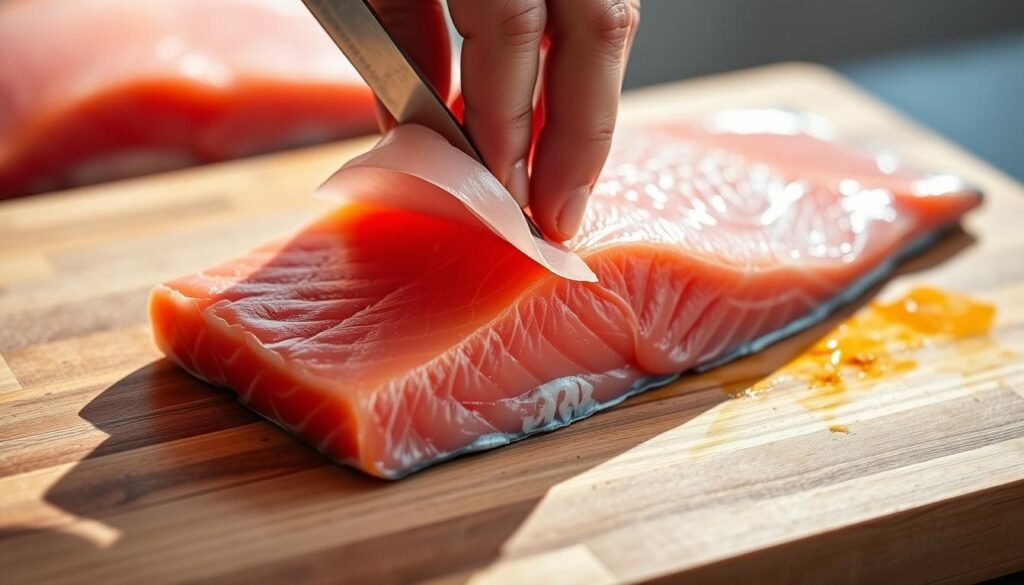
Did you know that cooking salmon with the skin on can help retain its moisture and flavor? However, removing the skin can be a bit tricky. Salmon skin removal is a simple process that requires a few basic kitchen tools.
With just a cutting board, a sharp knife, and a fresh salmon fillet, you can learn how to remove salmon skin in less than a minute. This technique is essential for chefs and home cooks alike, as it allows for a more versatile use of salmon in various recipes.
Removing the skin from salmon fillets not only makes it easier to cook but also enhances the overall dining experience. In this article, we’ll guide you through the steps to achieve perfectly skinned salmon.
Understanding Salmon Skin and Why You Might Want to Remove It
The decision to remove or keep salmon skin depends on various factors, including nutritional value, culinary preferences, and cooking methods. Understanding these aspects can help you make an informed decision that suits your cooking needs.
Nutritional Value of Salmon Skin
Salmon skin is not only edible but also packed with nutrients. It contains omega-3 fatty acids, vitamins, and minerals that are beneficial for health. However, it’s worth noting that the nutritional content can vary depending on the salmon’s diet and cooking method.
| Nutrient | Benefit | Retention in Cooked Salmon |
|---|---|---|
| Omega-3 Fatty Acids | Heart Health, Brain Function | High |
| Vitamin D | Bone Health, Immune System | Moderate |
| Protein | Muscle Repair, Satiety | High |
Culinary Reasons for Removing Salmon Skin
Many chefs prefer to remove salmon skin for culinary reasons. It can make the fish easier to cook evenly and prevent the skin from becoming too crispy or burnt. Additionally, removing the skin can improve the texture and presentation of the dish.
Some popular culinary techniques that benefit from skin removal include grilling, pan-searing, and baking. These methods can result in a more tender and flavorful final product.
When to Keep the Skin On
Keeping the salmon skin on can be beneficial in certain cooking scenarios. It helps to retain moisture during cooking and can add flavor to the dish. Poaching or steaming salmon with the skin on are excellent methods to keep the fish moist and tender.
By understanding the role of salmon skin in cooking, you can make informed decisions about whether to remove it or keep it on, ensuring your dishes are both delicious and nutritious.
Essential Tools for Removing Salmon Skin
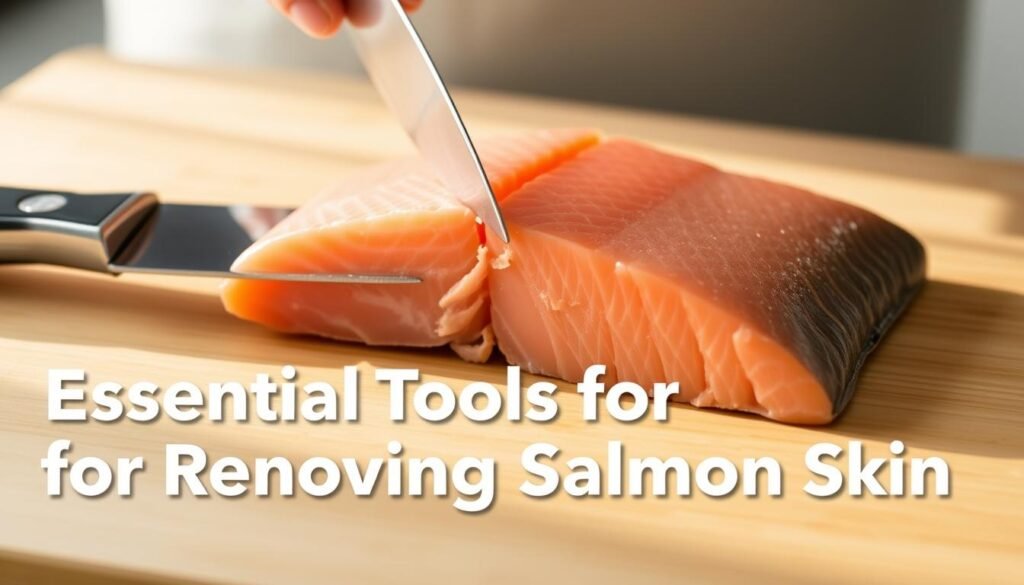
Having the essential tools on hand makes all the difference when skinning salmon. The right equipment can simplify the process and ensure a clean, efficient removal of the skin.
Types of Knives Best Suited for Skinning Salmon
A sharp knife is crucial for removing salmon skin. A chef’s knife or a fillet knife is ideal due to their sharpness and flexibility. These knives allow for precise cuts and help in minimizing waste.
Additional Tools That Make the Process Easier
In addition to a sharp knife, a cutting board and a kitchen towel can be very helpful. The cutting board provides a stable surface, while the kitchen towel can be used to grip the salmon fillet securely.
Setting Up Your Cutting Board
Setting up your cutting board correctly is vital. Ensure it’s clean and stable. You can also place a damp kitchen towel under the board to prevent it from slipping during the skinning process.
Preparing Your Workspace for Salmon Skin Removal
To ensure a smooth and safe salmon skin removal process, setting up your workspace correctly is essential. A well-organized workspace not only enhances efficiency but also minimizes the risk of contamination.
Setting Up a Clean and Safe Work Area
Begin by clearing your countertop of any clutter and ensure your cutting board is clean and stable. Sanitize all utensils and equipment that will come into contact with the salmon. This step is crucial in preventing cross-contamination and ensuring a professional salmon skin removal method.
Proper Handling of Raw Salmon
Handle raw salmon with care to avoid damaging the flesh. Always pick up the salmon by the edges or use a utensil to minimize direct contact. This careful handling is part of a step-by-step guide skinning salmon that yields the best results.
Food Safety Considerations
Always keep raw salmon refrigerated until you are ready to begin the skinning process. Use separate cutting boards for raw fish and other ingredients to prevent cross-contamination.
| Workspace Preparation Task | Importance Level |
|---|---|
| Clearing Countertop | High |
| Sanitizing Utensils | High |
| Refrigerating Raw Salmon | High |
How to Remove Skin of Salmon with a Knife: The Classic Method
The classic method of removing salmon skin with a knife is a technique that every home cook should master. This method allows for a clean and efficient removal of the skin, resulting in perfectly prepared salmon fillets for cooking.
Step-by-Step Instructions
To remove the skin from a salmon fillet, follow these steps carefully:
Positioning the Fillet
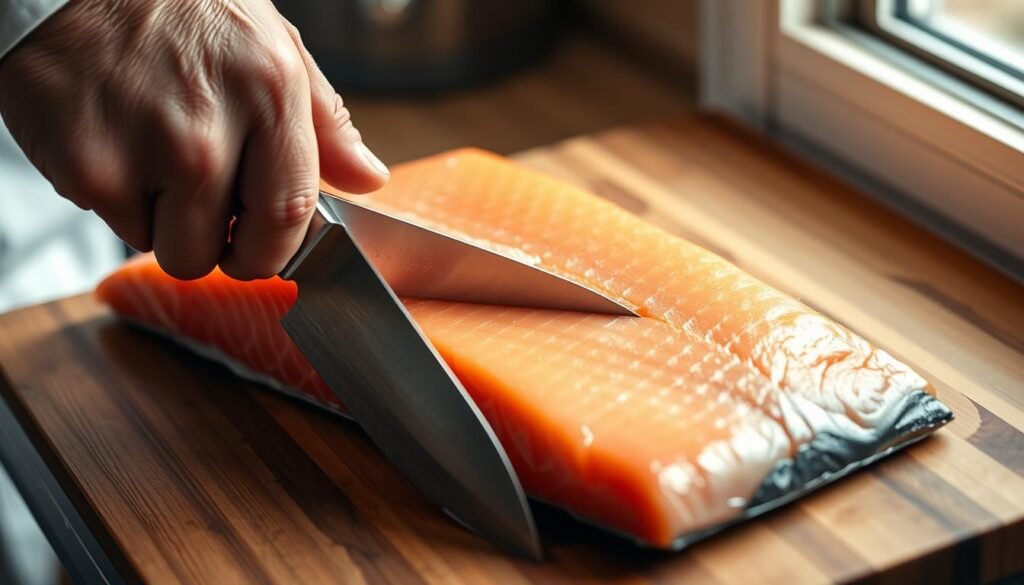
Start by placing the salmon fillet skin-side down on a clean, stable cutting board. Ensure the fillet is positioned in a way that allows you to work comfortably.
Making the Initial Cut
Hold a sharp fillet knife at a slight angle, and make a small incision between the skin and the flesh at one end of the fillet. This initial cut is crucial as it sets the stage for the rest of the skin removal process.
Pulling the Skin While Cutting
With the skin held firmly in one hand, use the other hand to carefully cut between the skin and the flesh, pulling the skin away as you go. Continue this process until the skin is completely removed.
Tips for Getting a Clean Cut
To achieve a clean cut, it’s essential to:
- Use a sharp knife to prevent tearing the flesh.
- Keep the knife at a slight angle to ensure the skin is removed without wasting too much flesh.
- Pull the skin taut to make the cutting process smoother.
Common Mistakes to Avoid
When removing salmon skin, avoid the following common mistakes:
- Using a dull knife, which can tear the flesh.
- Not holding the skin taut, making it harder to cut.
- Cutting too deeply, which can result in wasted flesh.
By following these steps and tips, you’ll be able to remove salmon skin efficiently, making your cooking process smoother and more enjoyable.
Alternative Technique: Removing Salmon Skin After Cooking
Cooking salmon with the skin on and then removing it is a game-changer for many recipes, offering a cleaner and less messy approach. This method is particularly useful when you’re looking for a straightforward way to prepare salmon without the hassle of skinning it raw.
When to Use This Method
Removing salmon skin after cooking is ideal for certain cooking techniques, such as grilling or pan-searing, where the skin can help retain moisture and flavor. It’s also a good option when you’re short on time or not comfortable skinning raw fish.
Step-by-Step Process
To remove salmon skin after cooking, follow these steps:
- Cook the salmon with the skin side down until it’s crispy and golden brown.
- Flip the salmon over and cook until it’s done to your liking.
- Once cooked, let it cool for a minute or two.
- Gently peel off the skin, starting from one edge.
Advantages and Disadvantages
The advantages of removing salmon skin after cooking include less mess and potentially less waste, as the skin can be more easily removed in one piece after cooking. However, this method may not be suitable for all recipes, and the skin may not come off as cleanly if it’s not cooked properly.
| Method | Advantages | Disadvantages |
|---|---|---|
| Removing Skin After Cooking | Less messy, potentially less waste | May not be suitable for all recipes, skin may not come off cleanly |
| Removing Skin Before Cooking | Suitable for most recipes, can be more precise | Can be messy, more waste if not done correctly |
By understanding the tips for removing salmon skin effectively, you can choose the best method for your salmon skin removal needs, ensuring a delicious and hassle-free dining experience.
Using Kitchen Tools to Simplify Salmon Skin Removal
The right kitchen tools can make salmon skin removal a breeze. Removing the skin is a crucial step in preparing salmon for cooking, and having the appropriate tools can simplify this process.
Fish Scalers and Specialized Tools
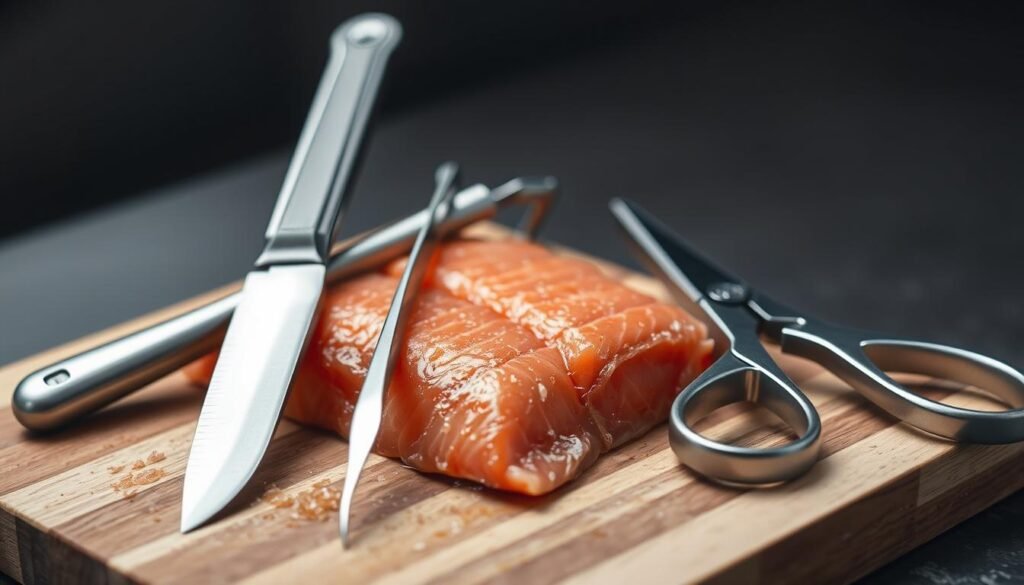
Specialized tools like fish scalers are designed to make removing salmon skin easier and more efficient. These tools are typically used for scaling fish but can also be effective in removing the skin. Fish scalers with ergonomic handles provide a comfortable grip, making the skinning process less strenuous.
Using Fish Pliers for Stubborn Skin
For particularly stubborn skin, fish pliers can be used to grip and remove the skin effectively. These pliers are designed to handle the delicate task of removing skin without damaging the underlying flesh. They are especially useful for larger salmon fillets.
Improvising with Common Kitchen Items
If you don’t have specialized tools, common kitchen items can be used as an alternative. For instance, a sharp fillet knife or even a pair of kitchen shears can be effective in removing salmon skin. The key is to be gentle and precise to avoid tearing the flesh.
Choosing Salmon That’s Easier to Skin
The key to effortless salmon skin removal lies in selecting the appropriate salmon variety and ensuring its freshness. When you’re preparing to cook salmon, the ease of skinning can greatly impact your overall experience.
Identifying Fresh Salmon with Easy-to-Remove Skin
Fresh salmon typically has a better texture that makes skin removal easier. Look for salmon with:
- Bright, shiny skin
- Firm flesh that springs back when touched
- A mild ocean smell, not a strong fishy odor
Best Salmon Varieties for Beginners
Some salmon varieties are easier to skin than others. For beginners, Atlantic and King Salmon are good choices due to their thicker skin, which is generally easier to remove.
Asking Your Fishmonger for Assistance
If you’re unsure about the freshness or variety of salmon, don’t hesitate to ask your fishmonger for advice. They can provide valuable insights into the best salmon for skinning and even offer to skin it for you.
Professional Chef Techniques for Skinning Salmon
Skinning salmon like a pro requires precision, the right tools, and a few insider techniques that professional chefs swear by. Mastering these methods can elevate your culinary skills and ensure a flawless dining experience.
Restaurant Methods for Perfect Skinless Fillets
In professional kitchens, chefs often use a fillet knife to remove the skin. The key is to make a smooth, even cut, starting from the tail end and working towards the head. This technique requires a bit of practice but yields perfectly skinless fillets every time.
Speed Techniques for Multiple Fillets
When dealing with multiple salmon fillets, speed and efficiency are crucial. Chefs often use a specialized filleting technique that involves keeping the knife at a consistent angle and applying gentle pressure. This method not only saves time but also ensures uniformity across all fillets.
Using the Freezer to Make Skinning Easier
A clever trick used by many chefs is to partially freeze the salmon before skinning. This firms up the flesh, making it easier to separate from the skin. Simply place the salmon in the freezer for about 30 minutes before attempting to skin it.
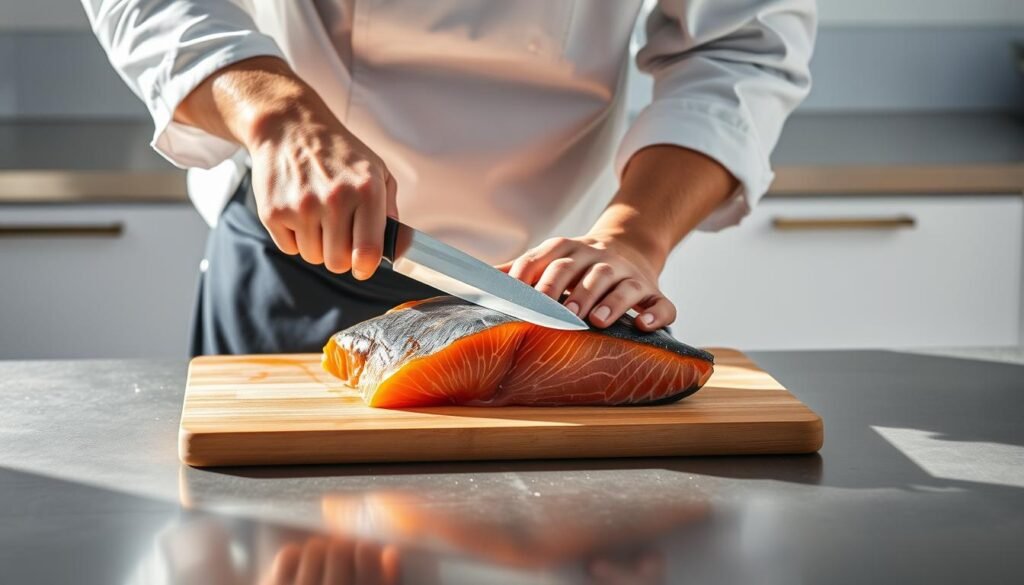
Troubleshooting: Solutions for Difficult Salmon Skin Removal
Troubleshooting salmon skin removal involves understanding the common problems and applying the right fixes. Even with the best techniques, issues can arise, but knowing how to address them can save your fillet.
Dealing with Thin or Delicate Salmon Fillets
Thin or delicate salmon fillets require extra care when removing the skin. To avoid tearing the fillet, use a sharp, thin-bladed knife and make a gentle sawing motion to separate the skin from the flesh. Keeping the fillet cold can also help firm up the flesh, making it easier to handle.
What to Do When the Skin Tears
If the skin tears during removal, don’t panic. Use a pair of tweezers or a small tool to carefully remove the remaining skin fragments. For more stubborn pieces, you can try using a little bit of salt to grip the skin, making it easier to pull off.
Salvaging Salmon When Skinning Goes Wrong
If skinning goes wrong and your fillet is damaged, there are still ways to salvage it. You can trim off any ragged edges and use the remaining fillet for dishes where appearance isn’t critical, like salmon burgers or fish cakes. Alternatively, you can use the damaged fillet in soups or stews where the fish will be broken down anyway.
What to Do with Removed Salmon Skin
Removing salmon skin is just the first step; now it’s time to decide how to use or dispose of it responsibly. After you’ve mastered the easy way to peel salmon skin, you can explore various creative and practical options for the removed skin.
Crispy Salmon Skin Recipes
One of the most popular uses for removed salmon skin is making crispy salmon skin snacks. Simply season the skin with your favorite spices, bake or fry it until crispy, and enjoy as a delicious appetizer or side dish. This method not only reduces waste but also adds a tasty element to your meal.
Making Fish Stock from Salmon Skin
Another excellent use for salmon skin is in making fish stock. The skin can be simmered with other fish bones and vegetables to create a rich, flavorful broth. This stock can then be used as a base for soups, sauces, or risottos, enhancing the overall flavor of your dishes.
Proper Disposal Methods
If you don’t plan to use the salmon skin in cooking, it’s essential to dispose of it properly. Wrap the skin tightly in plastic or place it in a sealed container to prevent leakage, and then discard it in the trash. Alternatively, consider composting it if you have the facilities to do so.
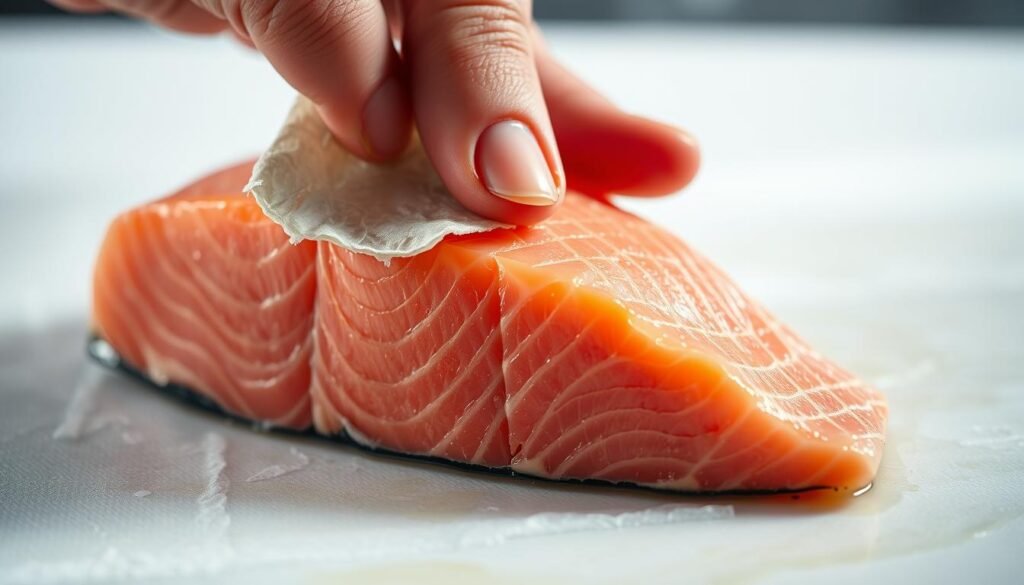
Conclusion: Mastering the Art of Salmon Skin Removal
Removing the skin of salmon can seem daunting, but with practice, it becomes easier. The key is to be patient and use the right techniques. By understanding the best methods for skinning salmon, you can enhance your cooking experience and achieve professional-grade results.
The techniques discussed, from using a knife to alternative methods after cooking, provide a comprehensive approach to how to remove skin of salmon. Whether you’re a beginner or an experienced chef, mastering the best technique skinning salmon is essential for preparing delicious salmon dishes.
As you continue to practice, you’ll find that removing salmon skin becomes second nature. Experiment with different methods and tools to find what works best for you. With time and patience, you’ll be able to prepare salmon fillets with ease and confidence.
FAQ
Is it necessary to remove the skin from salmon before cooking?
Removing the skin from salmon is not always necessary, but it can be beneficial for certain cooking methods or recipes. The skin can be left on for grilling or baking to help retain moisture, but it may be removed for dishes where a skinless fillet is preferred.
What is the best way to remove salmon skin?
The best way to remove salmon skin is by using a sharp knife to make a small incision between the flesh and the skin, then gently prying the skin away from the flesh. This can be done before or after cooking, depending on the desired method.
Can I remove salmon skin after cooking?
Yes, salmon skin can be removed after cooking. This method is often easier, as the cooked flesh tends to separate more easily from the skin. Simply let the cooked salmon cool slightly, then use a fork or spatula to gently lift the flesh away from the skin.
What tools do I need to remove salmon skin?
To remove salmon skin, you’ll need a sharp fillet knife or a boning knife. A cutting board with a non-slip surface is also helpful. Some cooks also use fish pliers or a fish scaler to make the process easier.
How do I choose the right salmon for easy skin removal?
Freshness and variety can affect how easily the skin comes off. Look for fresh, high-quality salmon, and consider varieties like Atlantic or Sockeye, which tend to have skin that’s easier to remove. Asking your fishmonger for assistance can also be helpful.
Can I use removed salmon skin in cooking?
Yes, removed salmon skin can be used in various dishes. It can be crisped up in a pan to make a crunchy snack or used to make a flavorful fish stock. Simply clean and dry the skin before using it in your recipe.
What should I do with leftover salmon skin?
If you don’t plan to use the salmon skin in cooking, it can be disposed of properly. Wrap it tightly in plastic wrap or aluminum foil and discard it in the trash. Alternatively, you can freeze it for later use in making fish stock.
Are there any professional techniques for removing salmon skin?
Professional chefs often use specialized techniques, such as using the freezer to firm up the flesh before skinning, or employing speed techniques for handling multiple fillets. These methods can help streamline the process and achieve a clean, skinless fillet.
What are some common mistakes to avoid when removing salmon skin?
Common mistakes include applying too much pressure, which can cause the skin to tear, or not making a clean incision between the flesh and skin. To avoid these issues, use a sharp knife and work slowly, taking care to separate the flesh from the skin gently.