
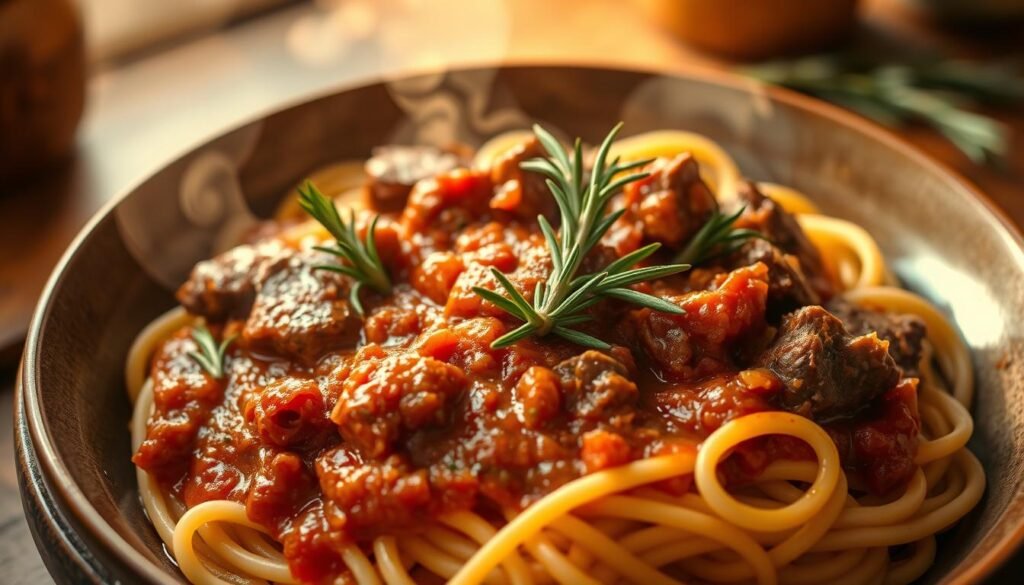
The traditional Italian cuisine is renowned for its rich flavors and slow-cooking techniques, and one of its most beloved dishes is the Lamb Ragu D’Abruzzo, flavored with rosemary. Originating from the Abruzzo region, this dish has captured the hearts of food enthusiasts worldwide.
This slow-cooked lamb ragu is a testament to the region’s culinary heritage, combining tender lamb with the fragrance of rosemary and other herbs. The result is a savory and deliciously authentic Italian experience.
In this article, we will explore the history and ingredients of this traditional dish, providing a comprehensive guide to recreating the Lamb Ragu D’Abruzzo Rose Mary Recipe at home. With its rich flavors and straightforward cooking techniques, this recipe is sure to become a favorite in your culinary repertoire.
The Rich Heritage of Lamb Ragu D’Abruzzo
Lamb Ragu D’Abruzzo, a quintessential Italian dish, has its roots in the pastoral traditions of the Abruzzo region. This region, known for its rugged landscape and rich agricultural practices, has been a hub for sheep herding for centuries, making lamb a staple ingredient in local cuisine.
Origins in the Abruzzo Region of Italy
The Abruzzo region’s unique cultural and geographical characteristics have significantly influenced the development of Lamb Ragu D’Abruzzo. The dish is a reflection of the region’s history, with lamb being a primary ingredient due to the extensive sheep grazing practices.
Cultural Significance of Lamb in Italian Cuisine
Lamb has played a vital role in Italian cuisine, particularly in the Abruzzo region, where it is used in various traditional dishes. The use of lamb in Italian cooking is not just about flavor; it’s also deeply rooted in cultural and historical contexts, making Lamb Ragu D’Abruzzo a dish that embodies the spirit of Italian culinary traditions.
The significance of lamb in Italian cuisine extends beyond the Abruzzo region, with lamb-based dishes being enjoyed across the country. However, the way lamb is prepared and cooked in Abruzzo gives Lamb Ragu D’Abruzzo its unique character, distinguishing it from other lamb dishes.
Understanding the Lamb Ragu D’Abruzzo Rose Mary Recipe
The Lamb Ragu D’Abruzzo Rose Mary recipe is a culinary masterpiece that combines the richness of lamb with the aromatic flavor of rosemary. This traditional Italian dish is a staple in the Abruzzo region, known for its bold flavors and hearty ingredients.
What Makes This Dish Special
The Lamb Ragu D’Abruzzo Rose Mary recipe stands out due to its slow-cooked lamb, which is tenderized to perfection, and the generous use of fresh rosemary, adding a unique aroma to the dish. The combination of these ingredients creates a rich and flavorful sauce that’s perfect for pasta.
| Key Ingredients | Role in the Recipe |
|---|---|
| Lamb | Provides the main protein and flavor base |
| Rosemary | Adds a distinctive aroma and flavor |
| Tomatoes | Contributes to the sauce’s richness and acidity |
The Role of Rosemary in Italian Cooking
Rosemary is a cornerstone herb in Italian cuisine, particularly in the Lamb Ragu D’Abruzzo Rose Mary recipe. Its piney flavor complements the lamb perfectly, creating a balanced taste experience. The use of rosemary in Italian cooking dates back centuries, with its versatility making it a staple in many traditional dishes.
Incorporating rosemary into the Lamb Ragu D’Abruzzo Rose Mary recipe not only enhances the flavor but also connects the dish to its cultural heritage. The herb’s aromatic properties elevate the overall dining experience, making the dish more enjoyable and authentic.
Essential Ingredients for Authentic Lamb Ragu D’Abruzzo
To create an authentic Lamb Ragu D’Abruzzo, it’s crucial to start with the right ingredients. The quality of the dish heavily relies on the freshness and authenticity of its components.
Selecting the Perfect Lamb Cut
The choice of lamb cut is vital for a tender and flavorful ragu. Opt for lamb shoulder or lamb neck, as these cuts are rich in connective tissue that breaks down during slow cooking, resulting in tender meat. The lamb should be cut into small, uniform pieces to ensure even cooking.
Fresh Rosemary and Other Herbs
Fresh rosemary is a key herb in Lamb Ragu D’Abruzzo, providing a piney flavor that complements the lamb. Other herbs like thyme and bay leaves add depth to the dish. Use fresh, high-quality herbs to achieve the best flavor.
Wine and Tomato Selection
A good red wine and canned tomatoes are essential for creating a rich sauce. The wine adds a layer of complexity, while the tomatoes provide acidity and sweetness. Choose a wine that you would drink, as it enhances the overall flavor.
Aromatics and Seasonings
Aromatics like onions, garlic, and carrots form the base of the ragu, adding a depth of flavor. Seasonings such as salt, black pepper, and a pinch of red pepper flakes enhance the overall taste. Use these ingredients thoughtfully to balance the flavors.
By focusing on these essential ingredients, you’ll be well on your way to creating a delicious and authentic Lamb Ragu D’Abruzzo that showcases the rich flavors of Italian cuisine.
Kitchen Tools and Equipment Needed
To prepare an authentic Lamb Ragu D’Abruzzo, it’s crucial to have the right kitchen tools and equipment. The quality of your cooking vessels and utensils can significantly impact the flavor and texture of your lamb ragu.
Traditional vs. Modern Cooking Vessels
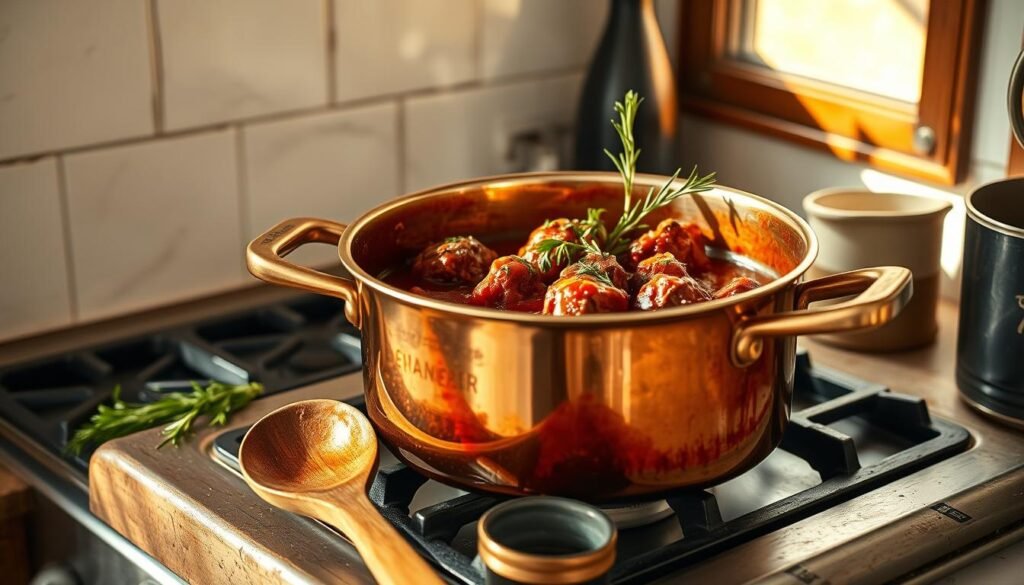
Traditionally, Italian cooks use clay pots or heavy-bottomed pots for slow-cooking lamb ragu. These vessels distribute heat evenly, allowing the lamb to tenderize perfectly. Modern alternatives include Dutch ovens or heavy pots with a thick bottom. Choosing the right cooking vessel is crucial for achieving the rich flavors associated with traditional Italian lamb ragu.
| Cooking Vessel | Material | Benefits |
|---|---|---|
| Clay Pot | Ceramic | Even heat distribution, traditional flavor |
| Dutch Oven | Cast Iron | Excellent heat retention, versatile |
| Heavy Pot | Stainless Steel or Copper | Durable, efficient heat conduction |
Essential Utensils for Preparation
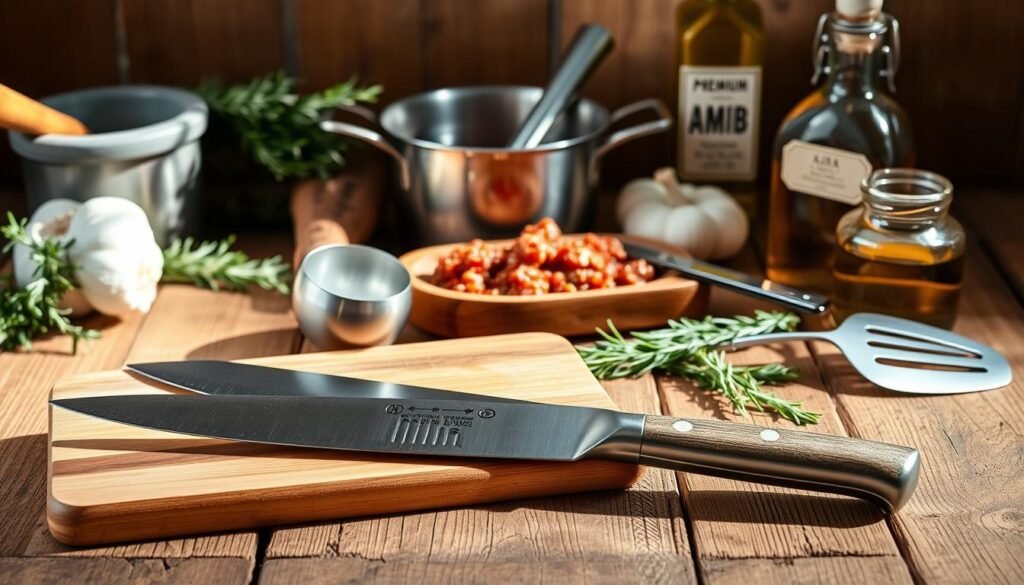
Preparing lamb ragu requires a set of essential utensils. A large cutting board is necessary for chopping ingredients, while a sharp knife ensures precise cuts. A wooden spoon or silicone spatula is ideal for stirring the sauce, and a meat thermometer ensures the lamb is cooked to perfection.
- Large cutting board
- Sharp knife
- Wooden spoon or silicone spatula
- Meat thermometer
Preparing Your Lamb Ragu D’Abruzzo Rose Mary Recipe
To create a truly authentic Lamb Ragu D’Abruzzo, it’s essential to start with the right preparation techniques. The preparation process involves several key steps that enhance the overall flavor and texture of the dish.
Preparing and Seasoning the Lamb
Selecting the right cut of lamb is crucial, with shoulder or neck being ideal for ragu due to their flavor and texture. Season the lamb generously with salt, black pepper, and a hint of Italian seasoning. Let it sit at room temperature before cooking to ensure even cooking.
Creating the Aromatic Base with Rosemary
Sauté chopped onions, carrots, and celery in olive oil until they’re soft and fragrant. Add fresh rosemary leaves and let them infuse their aroma into the oil. This base is the foundation of the ragu’s flavor profile.
Slow-Cooking Techniques for Tender Meat
Brown the lamb in batches to avoid overcrowding, then set it aside. Add the lamb back into the pot with the aromatic base, tomatoes, and red wine. Let it simmer on low heat for at least two hours, allowing the meat to become tender and the flavors to meld together.
Developing Rich Flavors
As the ragu simmers, the flavors intensify. Regularly stir and taste, adjusting the seasoning as needed. The slow-cooking process allows the lamb to absorb the flavors of the herbs, tomatoes, and wine, resulting in a rich and complex sauce.
| Cooking Method | Time | Result |
|---|---|---|
| Slow-Cooking | 2 hours | Tender Meat |
| Browning | 10 minutes | Rich Flavor |
| Simmering | 1.5 hours | Complex Sauce |
Step-by-Step Cooking Process
To create an authentic Lamb Ragu D’Abruzzo, follow this step-by-step cooking process that ensures a rich and flavorful sauce. This traditional Italian recipe relies on a few key steps to develop its characteristic taste and texture.
Browning the Lamb Properly
Browning the lamb is a crucial step that enhances the flavor of the ragu. To do this, heat a generous amount of olive oil in a large pan over medium-high heat. Add the lamb pieces and sear until they are nicely browned on all sides. This step should be done in batches if necessary, to avoid overcrowding the pan. Proper browning creates a rich, caramelized crust on the lamb that adds depth to the sauce.
Building Layers of Flavor
After browning the lamb, it’s time to build the layers of flavor. Start by sautéing onions, garlic, and fresh rosemary in the same pan until the aromatics are softened. Then, add a splash of red wine to deglaze the pan, scraping up any browned bits from the bottom. This process adds complexity and richness to the sauce.
Simmering and Reducing
Once the lamb and aromatics are combined, the mixture needs to be simmered gently to allow the flavors to meld together. This slow-cooking process tenderizes the lamb and reduces the sauce to a rich, velvety consistency. Regular stirring and skimming of excess fat are essential during this phase.
Finishing Touches for Perfect Texture
The final step involves adjusting the seasoning and achieving the perfect texture. If the sauce is too thick, a little water can be added. Conversely, if it’s too thin, simmering it for a few more minutes will help reduce it to the desired consistency. The result should be a hearty, flavorful lamb ragu that’s perfect for serving with pasta.
Tips for Perfecting Your Lamb Ragu D’Abruzzo
For a truly exceptional Lamb Ragu D’Abruzzo, incorporating expert advice and avoiding common mistakes is crucial. Mastering this traditional Italian dish requires a combination of technique, patience, and quality ingredients.
Common Mistakes to Avoid
One of the most common mistakes when preparing Lamb Ragu D’Abruzzo is overcooking the lamb, leading to tough, dry meat. To avoid this, it’s essential to monitor the cooking time closely and use a thermometer to ensure the lamb is cooked to the perfect tenderness. Another mistake is not browning the lamb properly, which can result in a lack of depth in the sauce.
Using low-quality ingredients can also significantly impact the flavor of your Lamb Ragu D’Abruzzo. Fresh rosemary, high-quality olive oil, and ripe tomatoes are crucial for achieving an authentic taste.
| Common Mistake | Impact on Dish | Solution |
|---|---|---|
| Overcooking the lamb | Tough, dry meat | Monitor cooking time, use a thermometer |
| Poor browning of lamb | Lack of depth in sauce | Brown lamb properly before slow-cooking |
| Using low-quality ingredients | Subpar flavor | Use fresh rosemary, high-quality olive oil, ripe tomatoes |
Expert Techniques for Maximum Flavor
To achieve maximum flavor in your Lamb Ragu D’Abruzzo, it’s crucial to develop a rich aromatic base. This involves slowly cooking the onions, garlic, and rosemary in olive oil until they are soft and fragrant. Another expert technique is to brown the lamb in batches, ensuring a nice crust on the meat, which enhances the overall flavor of the dish.
By incorporating these expert techniques and avoiding common mistakes, you can create a truly authentic and delicious Lamb Ragu D’Abruzzo that will impress your family and friends.
Pasta Pairings for Lamb Ragu D’Abruzzo
To fully enjoy the rich flavors of Lamb Ragu D’Abruzzo, choosing the right pasta is essential. The traditional Abruzzo region offers a variety of pasta shapes that complement the robust flavors of the lamb ragu.
Traditional Abruzzo Pasta Choices
In Abruzzo, pappardelle and rigatoni are popular choices for serving with lamb ragu. These pasta shapes hold onto the thick, meaty sauce, ensuring each bite is flavorful. Pappardelle’s wide, flat noodles are ideal for capturing the rich lamb flavors, while rigatoni’s tubular shape adds a delightful texture.
Modern Alternatives That Work Well
For those looking to experiment, modern alternatives like fusilli or farfalle can also pair well with Lamb Ragu D’Abruzzo. Fusilli’s spiral shape traps the sauce, and farfalle’s bow-tie shape adds a playful touch to the dish. These alternatives offer a fresh twist on traditional pairings while maintaining the integrity of the lamb ragu’s flavors.
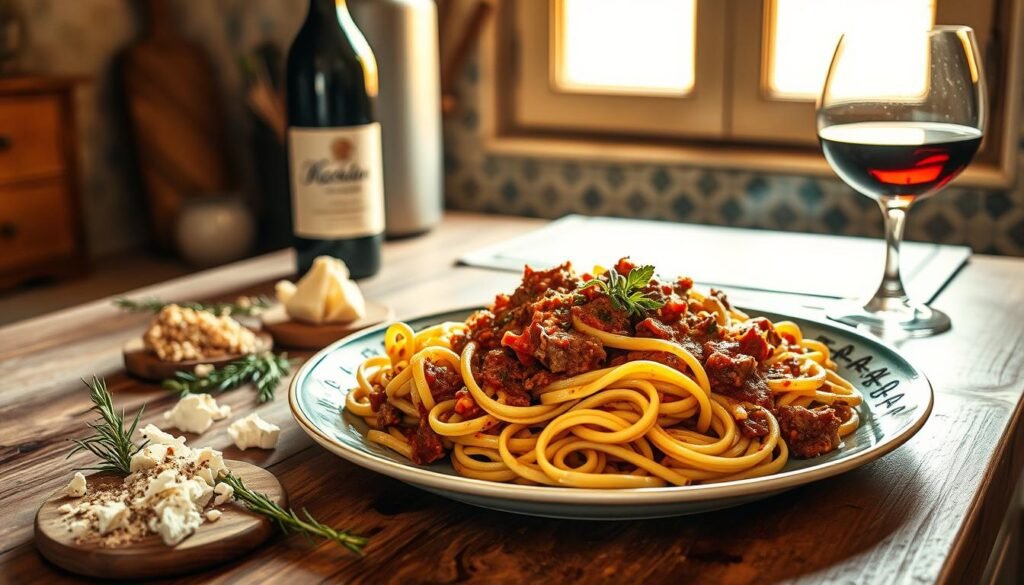
Serving and Presentation Ideas
A beautifully presented Lamb Ragu D’Abruzzo can impress your guests and enhance the meal. The presentation and serving style can elevate the overall dining experience, making your homemade lamb ragu a true culinary delight.
Traditional Plating Techniques
To serve your lamb ragu traditionally, place a generous portion of pasta on a plate, then top it with the rich lamb ragu. Use a deep plate to keep the sauce from spilling over.
Garnishes and Fresh Herbs
Garnishing with fresh herbs like rosemary or parsley can add a pop of color and freshness to the dish. Consider adding a sprinkle of grated Parmesan cheese for extra flavor.
Family-Style Serving Suggestions
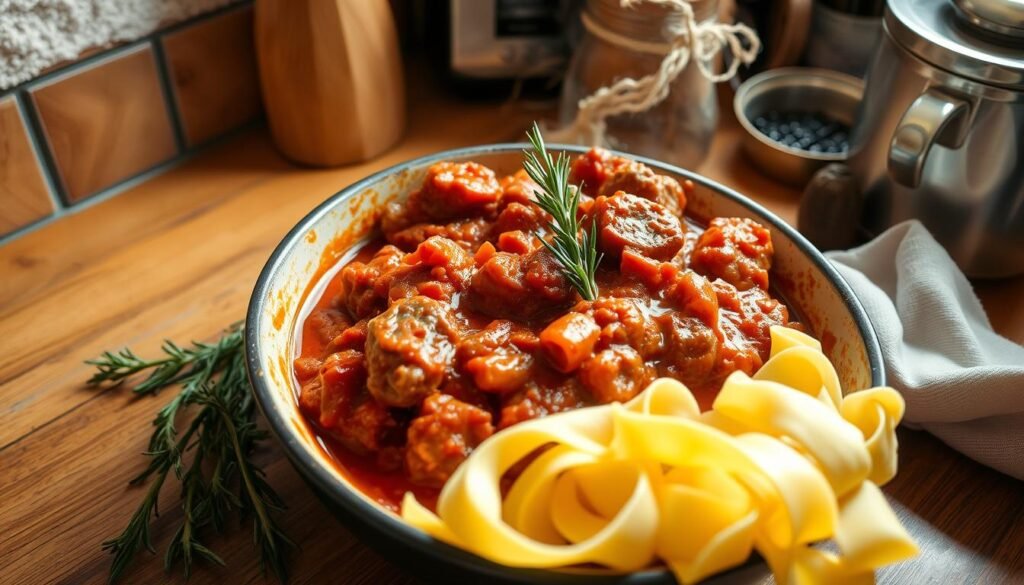
For a more casual, family-style serving, place the lamb ragu in a large serving dish and let everyone serve themselves. This approach encourages a warm, inviting atmosphere.
| Serving Style | Description | Garnish Suggestions |
|---|---|---|
| Traditional Plating | Individual portions, pasta topped with lamb ragu | Rosemary, Parmesan cheese |
| Family-Style | Large serving dish, self-service | Fresh parsley, garlic bread |
By incorporating these serving and presentation ideas, you can turn your homemade lamb ragu into a memorable dining experience.
Storing and Reheating Your Lamb Ragu D’Abruzzo
Proper storage and reheating are crucial for maintaining the quality of your homemade Lamb Ragu D’Abruzzo. Ensuring that the dish remains flavorful and tender requires attention to detail in both storage and reheating processes.
Proper Storage Methods
To store your Lamb Ragu D’Abruzzo, cool it to room temperature, then transfer it to an airtight container. It can be refrigerated for up to 3 days or frozen for up to 3 months. When freezing, consider portioning it into smaller containers for easier reheating.
| Storage Method | Duration |
|---|---|
| Refrigeration | Up to 3 days |
| Freezing | Up to 3 months |
Reheating Without Losing Flavor
To reheat, gently warm the Lamb Ragu D’Abruzzo over low heat, adding a splash of water or broth if it has thickened. Stir occasionally to prevent sticking. For frozen ragu, thaw overnight in the refrigerator before reheating.
Tip: Reheating slowly helps preserve the dish’s rich flavors and tender texture.
Conclusion
Recreating the traditional Italian lamb ragu at home is a rewarding experience, and with the lamb ragu d’abruzzo rose mary recipe, you can bring the authentic flavors of Italy to your table. This slow-cooked lamb ragu is a testament to the rich culinary heritage of the Abruzzo region.
The authentic lamb ragu recipe is characterized by its rich flavors and tender texture, achieved through the use of high-quality ingredients and careful cooking techniques. By following this homemade lamb ragu recipe, you can create a truly exceptional dish that showcases the best of Italian cuisine.
Whether you’re looking to impress your family and friends or simply want to enjoy a delicious meal, the lamb ragu d’abruzzo rose mary recipe is an excellent choice. With its blend of tender lamb, fragrant rosemary, and rich tomatoes, this best lamb ragu recipe is sure to become a favorite.
By mastering this traditional italian lamb ragu, you’ll be able to create a memorable dining experience that will leave a lasting impression. So, take the first step and start cooking your slow-cooked lamb ragu today!
FAQ
What is Lamb Ragu D’Abruzzo Rose Mary recipe?
Lamb Ragu D’Abruzzo Rose Mary recipe is a traditional Italian dish originating from the Abruzzo region, characterized by slow-cooked lamb flavored with rosemary and other herbs.
What type of lamb is best for Lamb Ragu D’Abruzzo?
For an authentic Lamb Ragu D’Abruzzo, it’s best to use lamb shoulder or lamb shanks, as they become tender with slow cooking and provide rich flavors.
Can I use dried rosemary instead of fresh rosemary?
While fresh rosemary is preferred for its vibrant flavor and aroma, dried rosemary can be used as a substitute in a pinch. Use about one-third the amount called for in the recipe.
How long does it take to cook Lamb Ragu D’Abruzzo?
Cooking Lamb Ragu D’Abruzzo is a slow process that typically takes about 2-3 hours, allowing the lamb to become tender and the flavors to meld together.
What pasta shapes pair well with Lamb Ragu D’Abruzzo?
Traditional pasta choices from Abruzzo, such as paccheri or chitarra, pair well with Lamb Ragu D’Abruzzo. Modern alternatives like pappardelle or rigatoni also work nicely.
Can I make Lamb Ragu D’Abruzzo ahead of time?
Yes, Lamb Ragu D’Abruzzo can be made ahead of time. It can be stored in the refrigerator for up to 3 days or frozen for later use, making it a great dish for meal prep.
How do I reheat Lamb Ragu D’Abruzzo without losing flavor?
To reheat Lamb Ragu D’Abruzzo, gently warm it over low heat, adding a bit of liquid (such as broth or wine) if necessary to achieve the desired consistency, ensuring the flavors remain rich and the lamb tender.
What are some common mistakes to avoid when making Lamb Ragu D’Abruzzo?
Common mistakes include not browning the lamb properly, not cooking the ragu long enough, and not balancing the flavors. Avoiding these mistakes will help achieve a rich and savory lamb ragu.