
Did you know that improperly smoked salmon can harbor harmful bacteria, posing serious health risks to consumers? Achieving the right internal temperature is crucial for ensuring the quality and safety of smoked salmon.
Smoking salmon requires precision to avoid undercooking or overcooking, both of which can have significant consequences. The ideal smoked salmon internal temp is a critical factor in this process.
This guide will walk you through the importance of monitoring the internal temperature when smoking salmon, providing you with the knowledge to produce high-quality, safe products.
The Science Behind Smoking Salmon
To achieve perfectly smoked salmon, one must grasp the science behind the smoking process, including the crucial role of temperature control. Smoking salmon involves preserving fish through a combination of salt-curing and smoking, which not only enhances its flavor but also ensures food safety.
How Smoking Preserves Fish
Smoking preserves fish by dehydrating it and infusing it with smoke, which contains compounds that act as natural preservatives. The process begins with salt-curing, where salt helps to draw out moisture from the fish, creating an environment less favorable for bacterial growth. Following salt-curing, the fish is smoked, either through cold or hot smoking methods, to further preserve it and enhance its flavor.
Cold Smoking vs. Hot Smoking Methods
The method of smoking—cold or hot—significantly affects the final product’s texture and flavor. Cold smoking, typically done at temperatures below 90°F (32°C), preserves the salmon’s delicate texture while infusing it with a rich, smoky flavor. Hot smoking, on the other hand, cooks the salmon at higher temperatures (usually between 120°F to 225°F or 49°C to 110°C), resulting in a flakier texture and a more intense flavor. Understanding these differences is key to achieving the ideal temp for smoked salmon.
| Smoking Method | Temperature Range | Resulting Texture |
|---|---|---|
| Cold Smoking | Below 90°F (32°C) | Delicate, silky |
| Hot Smoking | 120°F – 225°F (49°C – 110°C) | Flaky, cooked |
Why Internal Temperature of Smoked Salmon Matters
When it comes to smoked salmon, the internal temperature is a critical factor that affects not only food safety but also the texture and taste of the final product. Ensuring that smoked salmon is cooked to a safe internal temperature is crucial for consumer health and satisfaction.
Food Safety Considerations
Smoked salmon can be a breeding ground for harmful bacteria and parasites if not handled properly. Reaching a safe internal temperature is vital to eliminate these risks.
Eliminating Harmful Bacteria
Harmful bacteria such as Listeria and Clostridium botulinum can be present in smoked salmon. Cooking the salmon to the correct internal temperature helps to eliminate these pathogens, making the product safe for consumption. Proper temperature control is essential to prevent foodborne illnesses.
Parasites in Raw Salmon
Raw salmon can contain parasites like Anisakis. Smoking the salmon to a sufficient internal temperature helps to kill these parasites, ensuring the fish is safe to eat. It’s crucial to follow recommended temperature guidelines to mitigate these risks.
Impact on Flavor and Texture
The internal temperature of smoked salmon not only affects its safety but also its flavor and texture. Achieving the perfect temperature helps to preserve the delicate flavor and tender texture of the salmon. Overcooking or undercooking can lead to an undesirable texture and flavor profile, making temperature control critical in the smoking process.
The Ideal Internal Temperature of Smoked Salmon
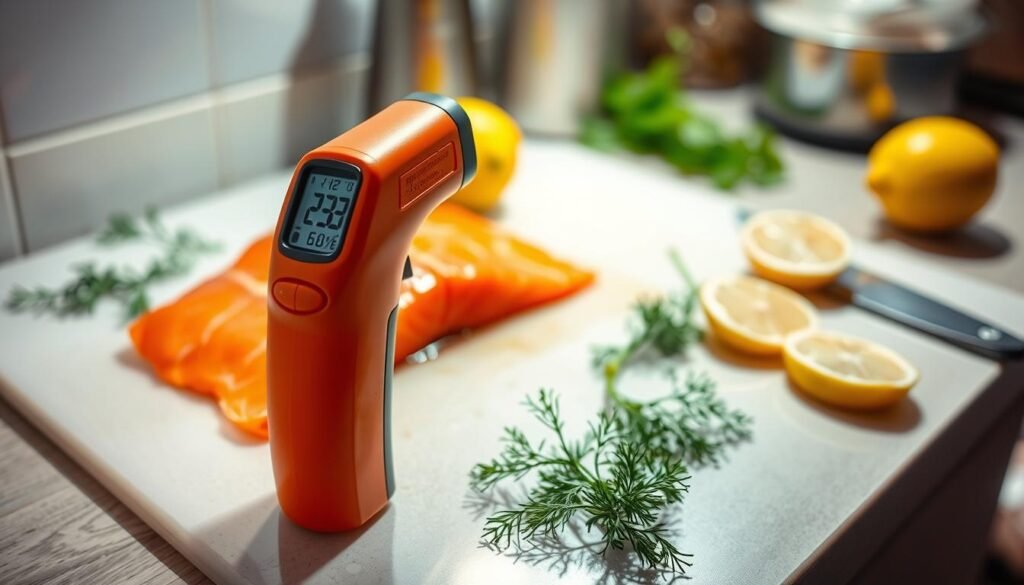
The internal temperature of smoked salmon is a critical factor that determines its safety and quality. Smoked salmon, a delicacy enjoyed worldwide, requires precise temperature control during the smoking process to ensure it is both safe to consume and possesses the desired flavor and texture.
FDA Recommended Temperature Guidelines
The FDA provides guidelines for the safe internal temperature of smoked salmon. According to the FDA, smoked salmon should be smoked at a temperature that ensures the fish reaches a safe minimum internal temperature. For smoked salmon internal temp, the FDA recommends achieving an internal temperature of at least 145°F (63°C) for hot-smoked salmon to ensure food safety.
However, it’s essential to note that different smoking methods may have varying temperature requirements. Understanding these guidelines is crucial for producers and consumers alike to ensure the quality and safety of the final product.
Temperature Variations Based on Smoking Method
The smoking method significantly influences the ideal internal temperature of smoked salmon. There are two primary smoking methods: cold smoking and hot smoking.
Cold Smoking Temperature Range
Cold smoking is a process that involves smoking the salmon at a lower temperature, typically between 68°F to 86°F (20°C to 30°C). This method is used to preserve the delicate flavor and texture of the salmon. Cold-smoked salmon is not cooked; hence, it’s often considered raw and should be handled with care to avoid contamination.
Hot Smoking Temperature Range
Hot smoking, on the other hand, involves smoking the salmon at a higher temperature, usually between 120°F to 180°F (49°C to 82°C), with the goal of cooking the fish to a safe internal temperature. Hot-smoked salmon is cooked and typically has a flaky texture and a more pronounced smoky flavor.
| Smoking Method | Temperature Range | Internal Temperature Goal |
|---|---|---|
| Cold Smoking | 68°F – 86°F (20°C – 30°C) | Not cooked; handled as raw |
| Hot Smoking | 120°F – 180°F (49°C – 82°C) | At least 145°F (63°C) |
Understanding the ideal internal temperature for smoked salmon is crucial for achieving the perfect balance between safety and quality. By following FDA guidelines and adjusting temperature based on the smoking method, one can enjoy delicious and safe smoked salmon.
Essential Equipment for Monitoring Salmon Temperature
Accurate temperature control is vital when smoking salmon, and the right tools make all the difference. Achieving the ideal internal temperature of smoked salmon is crucial for both food safety and quality.
Types of Meat Thermometers
There are several types of thermometers available for monitoring the temperature of smoked salmon. The most common include instant-read thermometers and wireless probe thermometers.
Instant-Read Thermometers
Instant-read thermometers provide quick and accurate temperature readings. They are ideal for checking the internal temperature at the end of the smoking process.
Wireless Probe Thermometers
Wireless probe thermometers allow for continuous monitoring of the salmon’s internal temperature without having to open the smoker. This helps maintain a consistent temperature.
Proper Thermometer Placement Techniques
Correct placement of the thermometer is crucial for accurate readings. The probe should be inserted into the thickest part of the salmon, avoiding any bones or fat.
| Thermometer Type | Use Case | Benefits |
|---|---|---|
| Instant-Read | Final temperature check | Quick, accurate readings |
| Wireless Probe | Continuous monitoring | Real-time updates, consistent temperature |
Step-by-Step Guide to Smoking Salmon to the Perfect Temperature
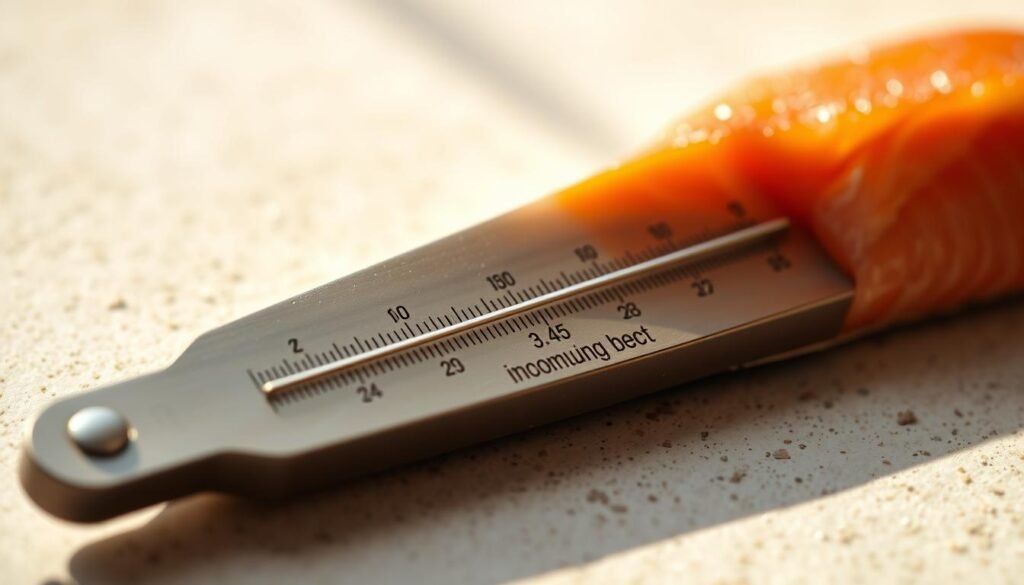
To smoke salmon perfectly, it’s crucial to follow a step-by-step guide that covers preparation, smoker setup, and temperature control. Smoking salmon is a multi-step process that requires attention to detail to achieve the ideal internal temperature.
Preparing Your Salmon
Preparation is key to smoking salmon. Start by selecting fresh, high-quality salmon fillets. Ensure the salmon is at room temperature before smoking to promote even cooking. Rinse the fillets under cold water, pat them dry with paper towels, and season with your desired herbs and spices.
Setting Up Your Smoker
Setting up your smoker correctly is vital for achieving the perfect internal temperature. Choose your preferred type of wood for smoking, such as alder or apple, as it will impact the flavor. Ensure your smoker is preheated to the appropriate temperature, typically between 150°F to 200°F for cold smoking.
Temperature Control Throughout the Process
Maintaining the right temperature is crucial throughout the smoking process. Use a meat thermometer to monitor the internal temperature of the salmon. The ideal internal temperature for smoked salmon is at least 145°F, as recommended by the FDA.
Knowing When Your Salmon is Done
Determining when your salmon is done involves checking both the internal temperature and the texture. The salmon should flake easily with a fork when it’s cooked through. Refer to the following table for a summary of the smoking process and key temperatures:
| Smoking Stage | Temperature (°F) | Notes |
|---|---|---|
| Preheating | 150-200 | Preheat smoker to desired temperature |
| Smoking | 145+ | Ensure internal temperature reaches 145°F |
| Final Check | – | Salmon should flake easily with a fork |
By following these steps and maintaining the ideal temperature, you’ll achieve perfectly smoked salmon every time.
Common Temperature Mistakes When Smoking Salmon
One of the most critical aspects of smoking salmon is avoiding temperature-related mistakes. Smoking salmon requires precision, particularly when it comes to temperature control. The internal temperature of smoked salmon is crucial for both food safety and quality.
Undercooking Risks
Undercooking salmon can lead to foodborne illnesses, as harmful pathogens may not be fully eliminated. To avoid undercooking, it’s essential to use a reliable meat thermometer to check the internal temperature of the salmon. The safe temperature for smoked salmon is typically considered to be at least 145°F (63°C). Ensuring that your salmon reaches this temperature is vital for consumer safety.
Overcooking Issues and How to Avoid Them
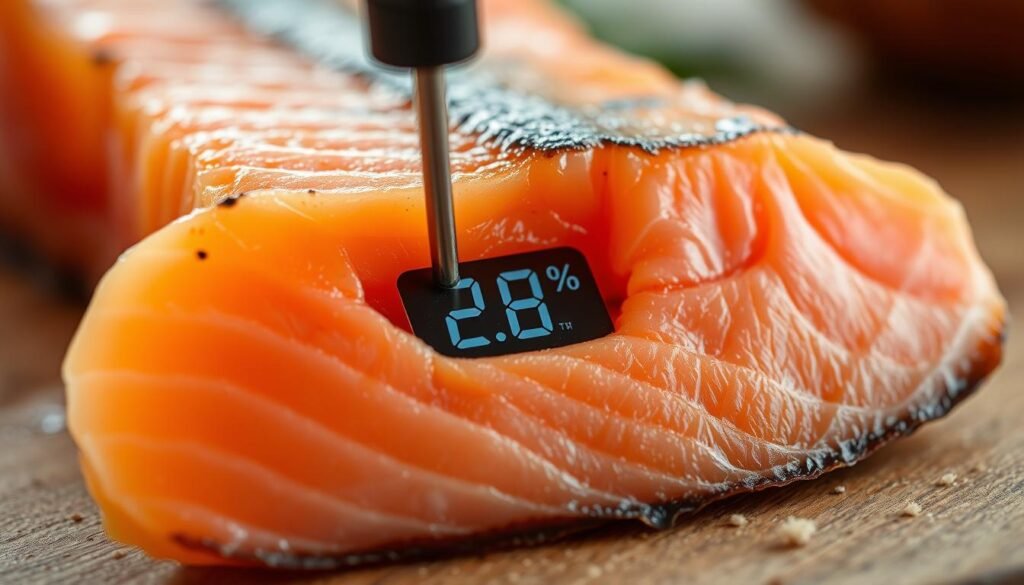
On the other hand, overcooking can result in a dry, tough texture and a loss of flavor. To prevent overcooking, it’s crucial to monitor the temperature throughout the smoking process. Using a thermometer with a probe that can be left in the salmon during smoking can help. Additionally, understanding the internal temperature guidelines for different smoking methods (cold smoking vs. hot smoking) can aid in achieving perfectly cooked salmon.
By being aware of these common temperature mistakes and taking steps to avoid them, you can ensure that your smoked salmon is both safe to eat and of high quality.
Safe Temperature Zones for Different Salmon Varieties
Understanding the safe temperature zones for various salmon types is essential for perfect smoking. Different salmon varieties have unique temperature requirements to ensure food safety and optimal flavor.
Wild-Caught Salmon Temperature Guidelines
Wild-caught salmon encompasses several species, each with its own temperature guidelines. The most common varieties include King (Chinook), Sockeye, and Coho salmon.
King (Chinook) Salmon
King salmon, known for its rich flavor and high fat content, requires an internal temperature of at least 145°F (63°C) to ensure food safety.
Sockeye Salmon
Sockeye salmon, with its deep red color and robust flavor, should be smoked to an internal temperature of 145°F (63°C) to 150°F (66°C) for optimal results.
Coho Salmon
Coho salmon, offering a milder flavor than King or Sockeye, should be smoked to an internal temperature of 140°F (60°C) to 145°F (63°C).
| Salmon Variety | Recommended Internal Temperature |
|---|---|
| King (Chinook) | 145°F (63°C) |
| Sockeye | 145°F (63°C) – 150°F (66°C) |
| Coho | 140°F (60°C) – 145°F (63°C) |
Farm-Raised Salmon Temperature Considerations
Farm-raised salmon, while often having a more consistent fat content than wild-caught varieties, still requires careful temperature control. The ideal internal temperature for farm-raised salmon is generally between 140°F (60°C) and 145°F (63°C), ensuring both safety and quality.
By following these guidelines, smokers can achieve perfectly cooked salmon, tailored to the specific variety being prepared. Whether you’re smoking wild-caught or farm-raised salmon, understanding and applying these temperature guidelines is key to a delicious and safe final product.
How Different Woods Affect Smoking Temperature and Flavor
The type of wood used in smoking salmon significantly affects both the temperature and the flavor profile. When smoking salmon, the choice of wood can enhance or detract from the final product’s quality.
Mild Woods for Delicate Flavor
Mild woods are ideal for those who prefer a delicate flavor in their smoked salmon. These woods provide a subtle smokiness without overpowering the natural taste of the salmon.
Alder and Apple Wood
Alder wood is a popular choice for smoking salmon due to its mild, sweet flavor. Apple wood, on the other hand, adds a fruity and slightly sweet flavor. Both are excellent options for achieving a smoked salmon internal temp of 145°F (63°C) while maintaining a delicate taste.
Cherry and Maple Wood
Cherry wood imparts a rich, fruity flavor, while Maple wood provides a subtle, slightly sweet taste. These woods are great for adding depth to the salmon without overwhelming it. Following a smoking salmon temperature guide ensures that the salmon is cooked to perfection.
Stronger Woods and Their Temperature Management
Stronger woods can add robust flavors to smoked salmon but require careful temperature management to avoid overpowering the fish.
Hickory and Oak
Hickory wood is known for its strong, savory flavor, while Oak wood provides a robust, smoky taste. Both require careful monitoring to maintain the ideal smoked salmon internal temp.
Mesquite and Other Strong Woods
Mesquite wood has a very strong, earthy flavor and is typically used in small amounts to avoid overpowering the salmon. Other strong woods like Pecan and Walnut can also be used, but temperature control is crucial.
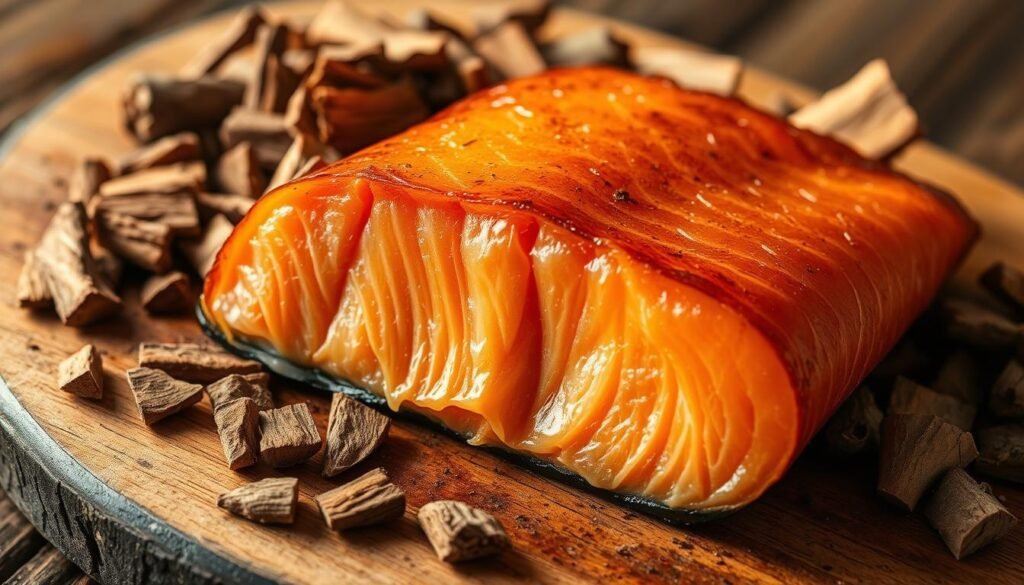
Storing Smoked Salmon After Reaching Proper Internal Temperature
Once your smoked salmon has reached the ideal internal temperature, the next crucial step is proper storage. This ensures that the salmon remains safe to eat and retains its quality.
Cooling and Refrigeration Guidelines
After smoking, it’s essential to cool the salmon to room temperature within two hours to prevent bacterial growth. To do this, place the salmon on a wire rack or tray, allowing air to circulate around it. Once cooled, store the smoked salmon in an airtight container or wrap it tightly in plastic wrap or aluminum foil. Refrigerate at a temperature below 38°F (3°C). Always check the salmon for any signs of spoilage before consumption, even if it’s within the storage timeframe.
Freezing Techniques for Long-Term Storage
For longer storage, freezing is an excellent option. To freeze smoked salmon, wrap it tightly in plastic wrap or aluminum foil, or place it in an airtight container or freezer bag. Label the package with the date and contents. Frozen smoked salmon can be stored for up to 3 months. When you’re ready to eat it, thaw the salmon in the refrigerator or under cold running water.
Conclusion: Mastering the Internal Temperature of Smoked Salmon
Mastering the internal temperature of smoked salmon is crucial for achieving high-quality, safe products. Throughout this guide, we’ve explored the science behind smoking salmon, the importance of internal temperature, and the techniques for monitoring and controlling it.
The ideal internal temperature of smoked salmon is critical for ensuring food safety and optimal flavor and texture. By following FDA-recommended temperature guidelines and understanding the differences between cold and hot smoking methods, you can produce delicious and safe smoked salmon.
Using the right equipment, such as meat thermometers, and proper thermometer placement techniques, helps to achieve the perfect smoked salmon internal temp. By avoiding common temperature mistakes, such as undercooking and overcooking, you can ensure a superior product.
Whether you’re smoking wild-caught or farm-raised salmon, understanding the safe temperature zones for different salmon varieties is essential. Additionally, the type of wood used for smoking can impact the flavor and temperature of the salmon.
By applying the knowledge and techniques outlined in this guide, you’ll be well on your way to mastering the internal temperature of smoked salmon, resulting in consistently delicious and safe products.
FAQ
What is the ideal internal temperature for smoked salmon?
The ideal internal temperature for smoked salmon varies based on the smoking method. For cold smoking, the temperature should be below 90°F (32°C), while hot smoking requires an internal temperature of at least 145°F (63°C) as per FDA guidelines.
Why is internal temperature crucial for smoked salmon?
Achieving the correct internal temperature is essential for ensuring food safety and preventing undercooking or overcooking, which can impact the flavor and texture of the final product.
What type of thermometer is best for monitoring the internal temperature of salmon?
A digital meat thermometer is recommended for accurate temperature monitoring. It’s essential to place the thermometer in the thickest part of the salmon fillet, avoiding any bones or fat.
How do different smoking methods affect the internal temperature of salmon?
Cold smoking involves smoking at a lower temperature, typically below 90°F (32°C), while hot smoking requires higher temperatures, usually above 145°F (63°C). The choice of method affects the final internal temperature and the texture of the salmon.
What are the risks of undercooking or overcooking smoked salmon?
Undercooking can lead to foodborne illnesses, while overcooking can result in dry, tough salmon. It’s crucial to monitor the internal temperature to avoid these issues.
How should I store smoked salmon after it has reached the proper internal temperature?
After smoking, it’s essential to cool the salmon promptly and store it in the refrigerator at a temperature below 40°F (4°C). For longer storage, freezing is recommended.
Can different types of wood used in smoking affect the temperature and flavor of salmon?
Yes, different types of wood can impact the flavor and temperature of smoked salmon. Mild woods like alder or applewood are suitable for delicate flavors, while stronger woods like mesquite can be used for bolder flavors.
Are there specific temperature guidelines for different salmon varieties?
While the FDA guidelines apply to all salmon, the ideal temperature may vary slightly based on the type of salmon, such as wild-caught or farm-raised. However, the recommended internal temperature remains the same.
What is the safe temperature zone for smoking salmon?
The safe temperature zone for smoking salmon depends on the smoking method. For hot smoking, the internal temperature should reach 145°F (63°C), while cold smoking should be below 90°F (32°C).