

The recipe for Feta Spring Flatbreads has taken the culinary world by storm, garnering over 21 million views on social media. This viral sensation is a testament to the power of combining simple, high-quality ingredients to create something truly special.
At its core, Feta Spring Flatbreads is about bringing together the tangy, salty taste of feta with the vibrant flavors of spring, all on a crispy flatbread. It’s a dish that’s as visually appealing as it is delicious.
This recipe is perfect for those looking to add a touch of elegance to their meals without spending hours in the kitchen. With its straightforward instructions and mouth-watering results, it’s no wonder Feta Spring Flatbreads has become a favorite among food enthusiasts.
Introduction to Feta Spring Flatbreads
Feta Spring Flatbreads are a delightful culinary creation that captures the essence of spring. This dish is perfect for a spring day feast, combining the freshness of spring ingredients with the savory taste of feta cheese.
The freshness of spring is what makes Feta Spring Flatbreads stand out. The recipe incorporates a variety of spring vegetables and herbs, making it a vibrant and flavorful dish. It’s an ideal choice for those looking to enjoy the tastes of the season.
What Makes This Dish Unique?
Several factors contribute to the uniqueness of Feta Spring Flatbreads. Firstly, the combination of crumbly feta cheese with fresh spring vegetables creates a delightful contrast of textures and flavors. The dish is also highly versatile, allowing for various toppings and fillings to suit different tastes.
- The use of fresh spring ingredients ensures a burst of flavor in every bite.
- Feta cheese adds a tangy, salty taste that complements the freshness of the vegetables.
- The flatbread base provides a satisfying crunch, making it a perfect snack or light meal.
The Origins of Flatbreads
Flatbreads have a rich history that spans across various cultures. Originating from ancient times, flatbreads were a staple food in many Mediterranean and Middle Eastern cuisines. The simplicity of flatbreads, made from basic ingredients like flour, water, and salt, allowed for endless variations and toppings, making them a popular choice for meals.
The modern version of Feta Spring Flatbreads draws inspiration from these traditional flatbreads, incorporating the freshness of spring ingredients and the savory taste of feta cheese. This fusion results in a dish that is both contemporary and rooted in culinary tradition.
In summary, Feta Spring Flatbreads are a spring recipe with feta cheese that embodies the freshness and flavors of the season. Whether you’re looking for a delicious snack or a light meal, this dish is sure to impress with its vibrant flavors and textures.
Key Ingredients for Feta Spring Flatbreads
To make authentic Feta Spring Flatbreads, it’s crucial to select the right ingredients that highlight the freshness of spring. The key ingredients for Feta Spring Flatbreads include high-quality feta cheese, fresh mint leaves, spinach, garlic, and Greek yoghurt, all of which come together to create a homemade flatbread with feta that’s both flavorful and refreshing.
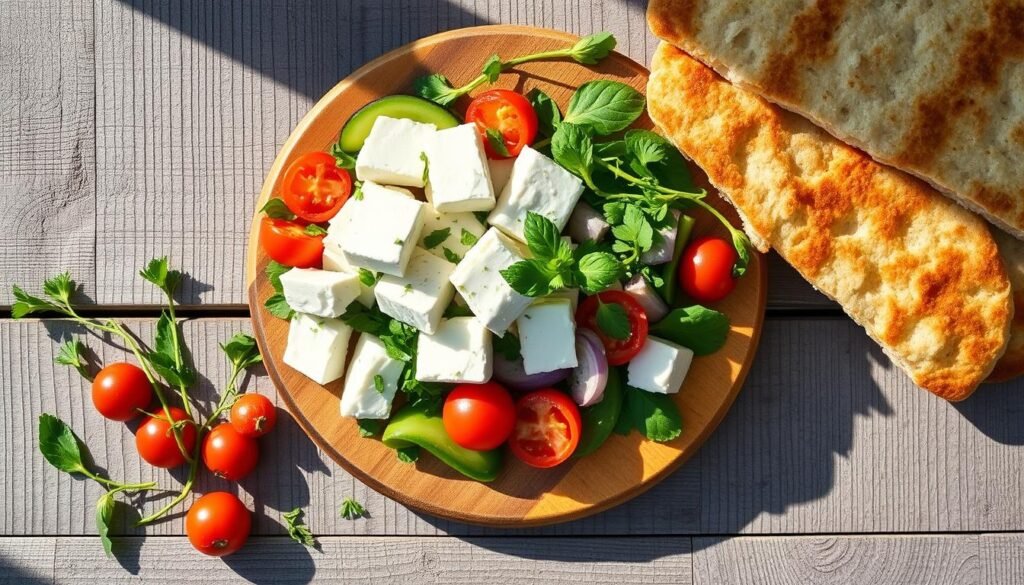
The Role of Feta Cheese
Feta cheese is the star of the Feta Spring Flatbreads, providing a tangy, salty flavor that complements the freshness of the spring vegetables. Using a high-quality feta and herb flatbread recipe that incorporates crumbled feta will enhance the overall taste. Feta cheese not only adds depth but also helps to balance the flavors of the other ingredients.
Fresh Spring Vegetables to Include
Fresh spring vegetables are essential to creating a vibrant and healthy Feta Spring Flatbread. Some of the key vegetables to include are fresh spinach leaves and mint leaves, which add a burst of freshness. These vegetables are not only delicious but also packed with nutrients, making the flatbread a nutritious option.
- Fresh spinach leaves
- Mint leaves
- Garlic for an added depth of flavor
Herbs and Spices for Flavor
The right herbs and spices can elevate the flavor of Feta Spring Flatbreads. In addition to the freshness of mint and spinach, other herbs like oregano and thyme can be used to add complexity. A sprinkle of black pepper and a drizzle of olive oil can further enhance the flavor profile, making it a perfect feta and herb flatbread recipe.
By combining these key ingredients for Feta Spring Flatbreads, you can create a delicious and authentic homemade flatbread that showcases the best of spring’s freshness.
Preparing the Flatbread Base
The key to making fantastic Feta Spring Flatbreads starts with preparing the flatbread base, a simple yet crucial step. This foundational element requires just a few ingredients and some basic techniques to get right.
Choosing the Right Dough
To make the flatbread base, you’ll need self-raising flour and Greek yoghurt. The combination of these two ingredients creates a dough that is both easy to work with and yields a deliciously tender flatbread. Mixing the dough is a straightforward process that involves combining the flour and yoghurt in a bowl and kneading for about 5 minutes, until the dough becomes smooth and pliable.
For an easy feta flatbread recipe, it’s essential to use high-quality ingredients. The self-raising flour provides a light texture, while the Greek yoghurt adds a tangy flavor that complements the feta cheese perfectly.
Tips for Rolling and Shaping Flatbreads
Once you have your dough ready, the next step is to roll and shape your flatbreads. To achieve the perfect shape, divide the dough into equal portions and roll each portion into a thin circle. This will help your flatbreads cook evenly and give them a professional appearance.
- Make sure the dough is rested before rolling it out to prevent it from shrinking back.
- Use a rolling pin to achieve a uniform thickness across the flatbread.
- Don’t overwork the dough, as this can make the flatbreads tough.
By following these tips, you can create quick feta flatbreads that are perfect for any occasion. Whether you’re serving them as an appetizer or as part of a larger meal, your Feta Spring Flatbreads are sure to be a hit.
Flavor Pairings with Feta Spring Flatbreads
Discover the perfect accompaniments to Feta Spring Flatbreads, from dips to drinks, that elevate its Mediterranean charm. The beauty of this dish lies in its versatility and the numerous ways it can be enjoyed.
Complementary Spreads and Dips
Feta Spring Flatbreads can be paired with a variety of spreads and dips to enhance their flavor. A classic combination is mint sauce and olive oil, which adds a refreshing twist to the savory taste of the flatbreads. Other options include:
- Hummus: A traditional Mediterranean dip made from chickpeas, tahini, garlic, and lemon juice.
- Tzatziki: A Greek yogurt-based dip with cucumber, garlic, and dill, offering a cool contrast.
- Baba Ghanoush: A smoky eggplant dip that adds depth to the flatbreads.

Suggested Wine and Beverage Pairings
The right beverage can elevate the dining experience. For Feta Spring Flatbreads, consider pairing with:
- Assyrtiko: A Greek white wine that complements the salty feta and fresh vegetables.
- Sparkling water with lemon: For a lighter option, a refreshing choice that cleanses the palate.
- Herbal tea: Such as mint or chamomile tea, which can be soothing and complement the herbal notes in the flatbreads.
By exploring these flavor pairings, you can create a personalized experience that suits your taste preferences, making Feta Spring Flatbreads a dish to remember.
Cooking Techniques for Perfect Flatbreads
To make flawless Feta Spring Flatbreads, one must grasp the nuances of Cooking Techniques for Perfect Flatbreads. This involves understanding the different methods available and how they impact the final product.
Baking vs. Grilling Flatbreads
When it comes to cooking flatbreads, two popular methods are baking and grilling. Each technique yields a distinct result, and the choice between them depends on personal preference and the desired texture.
Baking flatbreads in a preheated oven provides a consistent heat that cooks the bread evenly. This method is ideal for achieving a soft, lightly browned flatbread. To bake flatbreads, preheat your oven to 425°F (220°C) and cook for 10-12 minutes, or until lightly browned.
Grilling flatbreads, on the other hand, adds a smoky flavor and a crispy texture. Grilling is perfect for those who enjoy a charred exterior and a tender interior. To grill flatbreads, cook them over medium-high heat for 2-3 minutes per side, or until they develop grill marks and are cooked through.
Achieving the Ideal Texture
Achieving the ideal texture is crucial for Cooking Techniques for Perfect Flatbreads. Whether baking or grilling, the key is to cook the flatbreads until they are lightly browned and still tender.
Cooking flatbreads in a non-stick dry pan on medium to high heat for 3-5 minutes on each side is another effective method. This technique allows for a crispy exterior and a soft interior, making it ideal for Feta Spring Flatbreads.
| Cooking Method | Temperature | Cooking Time | Result |
|---|---|---|---|
| Baking | 425°F (220°C) | 10-12 minutes | Soft, lightly browned |
| Grilling | Medium-High Heat | 2-3 minutes per side | Smoky, crispy exterior, tender interior |
| Pan Cooking | Medium-High Heat | 3-5 minutes per side | Crispy exterior, soft interior |
By mastering these Cooking Techniques for Perfect Flatbreads, you can create delicious Feta Spring Flatbreads that are sure to impress. Whether you prefer baking, grilling, or pan cooking, the key is to achieve a balance between texture and flavor.
Serving Suggestions for Feta Spring Flatbreads
Serving Feta Spring Flatbreads can elevate any meal, whether you’re hosting a large party or enjoying a quiet evening at home. These delicious flatbreads can be served warm or cooled, depending on your preference, and paired with a variety of dips and spreads to enhance their flavor.
One of the simplest ways to serve Feta Spring Flatbreads is with a drizzle of olive oil and a sprinkle of fresh herbs. You can also serve them with a side of mint sauce for a refreshing twist. The key is to keep the presentation simple yet elegant, allowing the flavors of the flatbread to shine.
Creative Presentation Ideas
To make your Feta Spring Flatbreads visually appealing, consider the following creative presentation ideas:
- Arrange the flatbreads on a wooden board or a large platter to create a rustic and inviting display.
- Garnish with fresh flowers or herbs to add a pop of color and freshness.
- Serve with a variety of dips and spreads in small bowls or ramekins to offer different flavor options.

Portioning for Parties and Gatherings
When serving Feta Spring Flatbreads at parties or gatherings, it’s essential to consider the portion sizes. Here are some tips:
- Cut the flatbreads into smaller pieces or strips to make them easier to grab and go.
- Plan for 2-3 pieces per guest as a rough estimate, depending on the size of the flatbreads and the serving style.
- Consider serving the flatbreads as part of a larger spread, including other finger foods and appetizers.
By following these serving suggestions, you can ensure that your Feta Spring Flatbreads are a hit at any gathering. Whether you’re looking for a simple snack or an impressive appetizer, these flatbreads are sure to delight your guests.
Variations of Feta Spring Flatbreads
To give Feta Spring Flatbreads a personal touch, consider trying out different variations. This dish is highly versatile, allowing you to experiment with various ingredients to suit your taste preferences or dietary needs.
Vegetarian Options
For a vegetarian version of Feta Spring Flatbreads, you can focus on enhancing the flavors of the spring vegetables and herbs. Consider adding roasted vegetables like eggplant or zucchini to give the flatbread more texture and flavor. You can also use vegan cheese alternatives to feta, made from nuts or soy, to keep the dish dairy-free.
Another vegetarian option is to incorporate a variety of leafy greens such as spinach or arugula into the flatbread. These greens not only add a burst of freshness but also provide a nutritious boost to your meal.
Adding Proteins for a Heartier Meal
If you’re looking to make your Feta Spring Flatbreads more substantial, adding proteins is a great way to do so. Grilled chicken or sautéed beef can be excellent additions, providing a satisfying and filling meal. For a Mediterranean twist, consider adding lamb or chicken souvlaki on top of the flatbread.
You can also incorporate seafood like shrimp or anchovies for a different flavor profile. These proteins can be marinated in herbs and spices that complement the feta cheese and spring vegetables, enhancing the overall taste of the dish.
By exploring these variations, you can enjoy Feta Spring Flatbreads in multiple ways, making it a versatile dish for any occasion. Whether you’re in the mood for a vegetarian delight or a heartier meal with added proteins, Feta Spring Flatbreads are sure to satisfy your cravings.
Storing Leftover Flatbreads
The key to enjoying your homemade flatbreads with feta for days to come lies in proper storage. Whether you’ve made a batch of flatbreads as part of an easy feta flatbread recipe or simply have leftovers from a meal, storing them correctly is crucial.

Best Practices for Storage
To keep your leftover flatbreads fresh, follow these storage tips:
- Cool the flatbreads completely before storing to prevent moisture buildup.
- Place the cooled flatbreads in an airtight container or wrap them tightly in plastic wrap or aluminum foil.
- Store the flatbreads at room temperature for up to 2 days or in the refrigerator for up to 4 days.
- For longer storage, consider freezing the flatbreads. Wrap them individually and place in a freezer-safe bag or container.
Reheating Tips for Freshness
Reheating your stored flatbreads properly can restore their freshness and flavor. Here are some reheating tips:
- Oven Reheating: Preheat your oven to 375°F (190°C). Wrap the flatbread in foil and heat for about 5-7 minutes, or until warmed through.
- Air Fryer Reheating: Place the flatbread in the air fryer basket and heat at 300°F (150°C) for 2-3 minutes, or until crispy.
- Microwave Reheating: Wrap the flatbread in a damp paper towel and microwave on high for 20-30 seconds, or until soft and warm.
By following these storing leftover flatbreads tips, you can enjoy your homemade flatbreads with feta for a longer period while maintaining their quality.
Nutritional Benefits of Feta Spring Flatbreads
Feta Spring Flatbreads are not only a delight to the taste buds but also offer numerous nutritional benefits. The combination of feta cheese and spring vegetables creates a dish that is rich in essential nutrients.
Health Benefits of Feta Cheese
Feta cheese is a significant source of calcium, crucial for maintaining healthy bones and teeth. It also contains protein, which is vital for muscle repair and growth. Additionally, feta cheese has probiotics that support gut health.
Nutritional Value of Spring Vegetables
Spring vegetables add a burst of freshness and nutritional value to the flatbreads. They are rich in vitamins A and C, potassium, and fiber. These vegetables help in maintaining healthy digestion, boosting the immune system, and supporting overall well-being.
The synergy between feta cheese and spring vegetables in Feta Spring Flatbreads makes for a nutritious meal. Here’s a breakdown of the nutritional benefits in a tabular form:
| Nutrient | Feta Cheese | Spring Vegetables |
|---|---|---|
| Calcium | High | Moderate |
| Protein | High | Low |
| Vitamin A & C | Low | High |
| Potassium | Moderate | High |
| Fiber | Low | High |
Incorporating Feta Spring Flatbreads into your diet can be a delicious way to enhance your nutritional intake. The Mediterranean diet, which often features such flatbreads, is known for its health benefits, including reduced risk of heart disease and improved longevity.
By enjoying Spring flatbreads with vegetables, you’re not only treating your taste buds but also providing your body with essential nutrients. The versatility of Feta Spring Flatbreads allows for various combinations of vegetables and herbs, making it easy to keep the dish interesting and nutritious.
Conclusion: Enjoying Feta Spring Flatbreads
The Feta Spring Flatbreads dish is a versatile and flavorful recipe that can be enjoyed in various settings. Whether you’re looking for a quick snack or a light meal, Quick feta flatbreads are an excellent choice.
Exploring Flavor Combinations
One of the joys of making Feta Spring Flatbreads is experimenting with different flavor combinations. By incorporating various herbs, spices, and vegetables, you can create a unique taste experience each time you make the dish.
Creating Your Own Variations
We encourage you to get creative with the Feta Spring Flatbreads recipe. Try adding different proteins or vegetables to make it your own. The possibilities are endless, and the result is sure to be delicious. Enjoy your Quick feta flatbreads and happy cooking!
FAQ
What is the best type of feta cheese to use for Feta Spring Flatbreads?
The best type of feta cheese to use is a high-quality, tangy, and crumbly Greek feta, which provides the perfect balance of flavors to the dish.
Can I make Feta Spring Flatbreads ahead of time?
Yes, you can prepare the flatbread dough and toppings ahead of time, but it’s best to assemble and bake the flatbreads just before serving to ensure maximum freshness.
What are some vegetarian options for Feta Spring Flatbreads?
Some great vegetarian options include adding roasted vegetables like asparagus, bell peppers, or zucchini, or using different types of cheese like goat cheese or ricotta.
How do I achieve the perfect texture for my flatbreads?
To achieve the perfect texture, make sure to roll out the dough to the right thickness, and bake or grill the flatbreads until they’re crispy on the outside and tender on the inside.
Can I freeze Feta Spring Flatbreads?
Yes, you can freeze the flatbreads, but it’s best to freeze them before baking. Simply thaw and bake when you’re ready to serve.
What are some suggested wine pairings for Feta Spring Flatbreads?
A crisp and refreshing white wine like Sauvignon Blanc or Pinot Grigio pairs perfectly with the bright, spring flavors of the dish.
How do I store leftover Feta Spring Flatbreads?
Store leftover flatbreads in an airtight container in the refrigerator for up to a day or two, and reheat in the oven or microwave until crispy and warm.
Can I make Mediterranean flatbreads with different toppings?
Yes, feel free to get creative with different toppings and ingredients to make your own unique Mediterranean flatbreads.
What are some easy ways to make Feta Spring Flatbreads?
Using pre-made flatbread dough or pre-crumbled feta cheese can make the recipe even quicker and easier.
Are Feta Spring Flatbreads a healthy snack option?
Feta Spring Flatbreads can be a relatively healthy snack option, especially when topped with fresh spring vegetables and herbs, which provide a boost of vitamins and antioxidants.